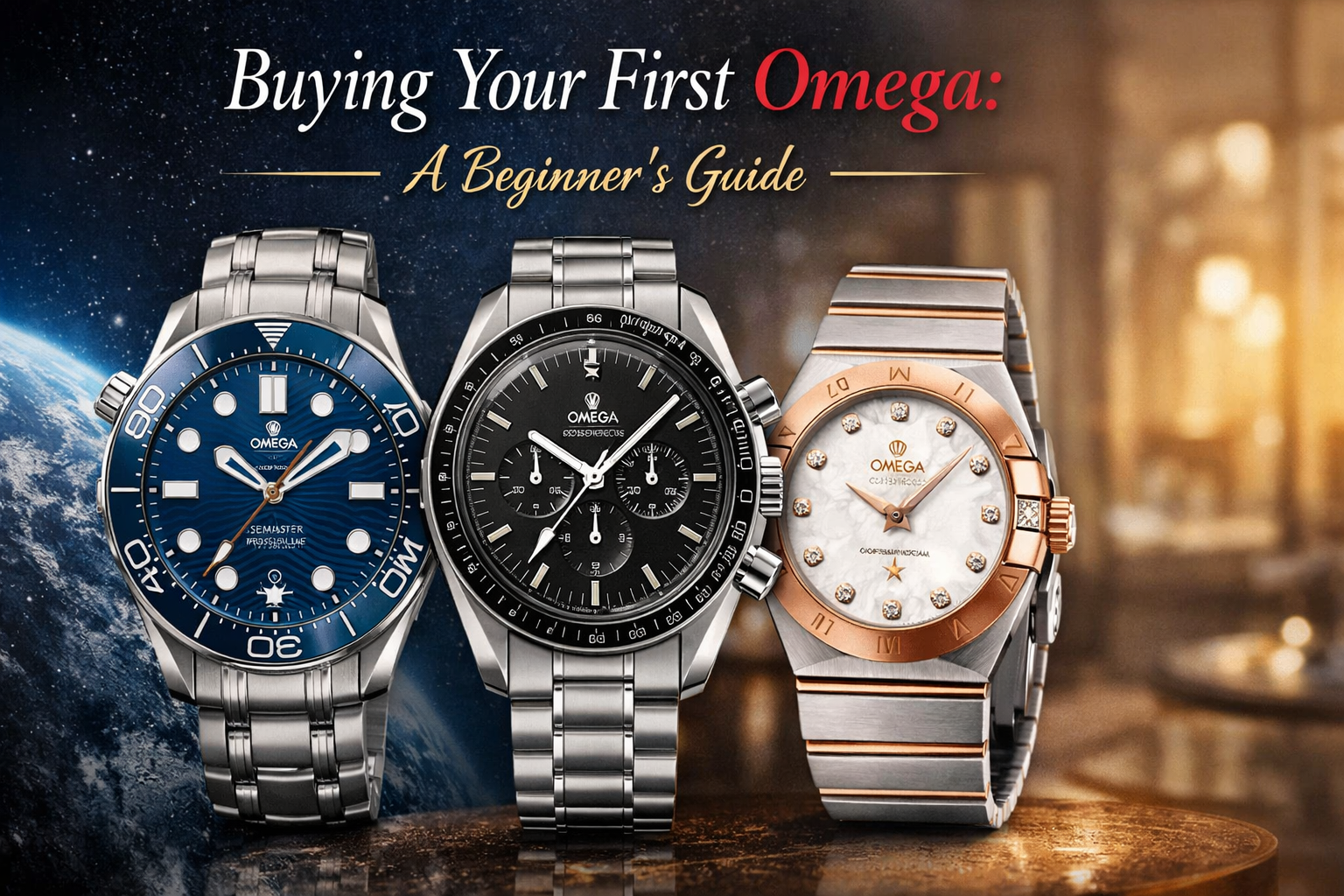
Buying Your First Omega: A Beginner’s Guide
Entering the world of luxury watches is an exciting milestone, and few names carry as much prestige and heritage as Omega. Known for its precision, innovation, and deep-rooted history in horology, Omega offers an accessible yet highly respected entry point for first-time collectors.
If you’re considering your first Omega, this guide will walk you through everything you need to know—from understanding the brand’s legacy to choosing the right model and making a confident purchase.
Why Choose Omega as Your First Luxury Watch?
For beginners, Omega strikes a rare balance between history, craftsmanship, and everyday usability. Founded in 1848, the brand has built a reputation not only for elegant design but also for technical excellence. Omega watches have been worn in space, on the wrists of professional divers, and even by fictional icons like James Bond.
Unlike some brands that can feel intimidating to newcomers, Omega offers a welcoming entry into serious watch collecting. Its collections are diverse, its designs are timeless, and its movements are widely respected in the industry.
Another reason Omega appeals to beginners is its strong identity. Each collection has a clear purpose and aesthetic, making it easier to find a watch that aligns with your lifestyle.
Understanding Omega’s Core Collections
Before making your first purchase, it’s essential to familiarize yourself with Omega’s main collections. Each line tells a different story and serves a different function.
Seamaster: The Sporty Icon
The Seamaster collection is one of Omega’s most recognizable lines. Originally designed for diving, it combines rugged functionality with refined aesthetics.
Popular among both professionals and casual wearers, Seamaster models often feature water resistance, rotating bezels, and luminous markers. They are versatile enough to wear with both a wetsuit and a blazer.
If you lead an active lifestyle or want a watch with a sporty edge, the Seamaster is a compelling choice.
Speedmaster: The Legendary Chronograph
Few watches carry as much historical significance as the Speedmaster. Famously worn during NASA’s Apollo missions, it earned the nickname “Moonwatch.”
The Speedmaster is a chronograph, meaning it includes stopwatch functionality. Its design has remained remarkably consistent over the decades, giving it a timeless appeal.
For many collectors, the Speedmaster is more than just a watch—it’s a piece of history on the wrist.
Constellation: Elegance and Precision
The Constellation collection represents Omega’s dedication to precision and refined design. Known for its distinctive “Griffes” (claws) and integrated bracelet, it offers a more dress-oriented aesthetic.
This line is ideal for those who prefer a polished, sophisticated look. It works well in formal settings while still maintaining a unique visual identity.
De Ville: Classic Simplicity
If minimalism and understated elegance appeal to you, the De Ville collection is worth exploring. These watches emphasize clean dials, slim profiles, and timeless proportions.
De Ville models are often chosen as dress watches, perfect for formal occasions or professional environments.
Quartz vs Mechanical: What Should You Choose?
One of the first decisions you’ll face is whether to go for a quartz or mechanical movement.
Quartz watches are battery-powered, highly accurate, and require minimal maintenance. They are often recommended for beginners who want convenience.
Mechanical watches, on the other hand, are powered by intricate movements made of hundreds of tiny components. They can be either manual-winding or automatic (self-winding). Mechanical watches are appreciated for their craftsmanship and tradition.
Omega is particularly renowned for its mechanical movements, especially its Co-Axial escapement technology, which enhances precision and reduces wear over time.
If you’re drawn to the artistry of watchmaking, a mechanical Omega is often the more rewarding choice.
Size, Fit, and Comfort
A watch may look stunning in photos, but how it feels on your wrist is equally important.
Case size is typically measured in millimeters. While trends fluctuate, the best size is ultimately the one that fits your wrist comfortably. A watch should not overhang your wrist or feel too tight.
Thickness also matters. Thinner watches tend to feel more elegant, while thicker ones often have a sportier presence.
Don’t overlook the bracelet or strap. Metal bracelets offer durability and a premium feel, while leather straps provide comfort and versatility.
New vs Pre-Owned: What to Consider
First-time buyers often debate whether to purchase a brand-new watch or explore the pre-owned market.
Buying new offers peace of mind. You receive a factory-fresh watch, full warranty, and the complete retail experience.
Pre-owned watches, however, open up a wider range of possibilities. You may find discontinued models, vintage pieces, or watches with unique character. For many enthusiasts, the hunt is part of the enjoyment.
If you choose pre-owned, it’s crucial to buy from a reputable source and verify authenticity.
Authenticity and Trust
In the luxury watch world, authenticity is everything. Counterfeit watches can be highly convincing, especially to beginners.
Here are a few key tips:
- Always buy from trusted dealers or established platforms
- Check for original documentation and serial numbers
- Examine finishing details—luxury watches are meticulously crafted
- When in doubt, seek professional verification
A genuine Omega will exhibit a level of precision and finishing that is difficult to replicate.
Servicing and Long-Term Care
Owning a luxury watch is a long-term commitment. Proper care ensures that your timepiece remains reliable and beautiful for years to come.
Mechanical watches should be serviced periodically to maintain optimal performance. This involves cleaning, lubrication, and adjustment of the movement.
Daily care also matters:
- Avoid exposing your watch to extreme temperatures
- Rinse it after contact with saltwater
- Store it properly when not in use
With proper maintenance, an Omega can last generations.
Building Your Personal Style
Your first Omega should reflect your personality and lifestyle. While it’s easy to be influenced by trends or popular models, the best choice is one that resonates with you.
Ask yourself:
- Will I wear this daily or occasionally?
- Do I prefer sporty or formal designs?
- Do I want a bold statement or subtle elegance?
Your answers will guide you toward the right collection and model.
Remember, there is no “perfect” first watch—only the one that feels right for you.
Learning from the Watch Community
One of the most rewarding aspects of watch collecting is the community. Online forums, blogs, and enthusiast groups are filled with valuable insights and real-world experiences.
Reading reviews from other collectors can help you understand how a watch performs over time, how it wears, and what owners truly appreciate about it.
Many seasoned collectors emphasize patience. Take your time, do your research, and enjoy the process. The journey is just as meaningful as the purchase itself.
Final Thoughts
Buying your first Omega is more than just acquiring a watch—it’s stepping into a world of craftsmanship, history, and personal expression.
Whether you’re drawn to the adventurous spirit of the Seamaster, the legendary heritage of the Speedmaster, or the refined elegance of the Constellation and De Ville, Omega offers a path that suits every beginner.
As you begin your journey, focus on learning, exploring, and discovering what truly speaks to you. With the right approach, your first Omega won’t just be a purchase—it will be the start of a lifelong passion.