
Review: The Zenith Pilot Type 20 Extra Special Bronze
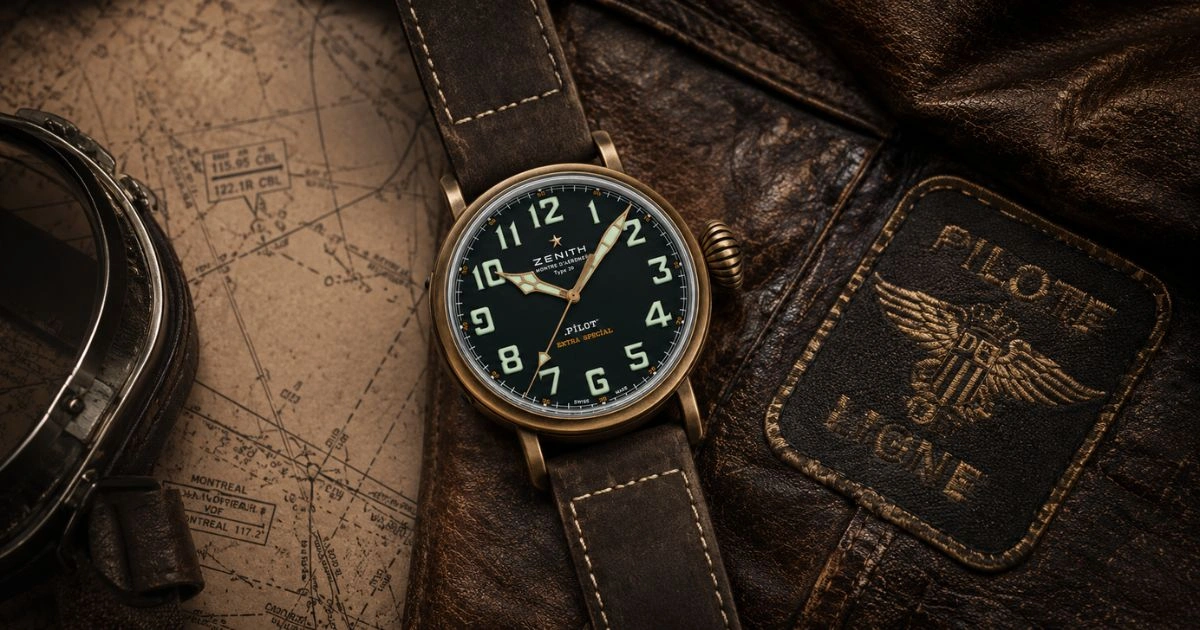
A Cockpit Essential for the Modern Adventurer
If there is one genre in watchmaking that allows a brand to be theatrical, it is the Pilot watch. Unlike the sterile environment of a boardroom or the high-pressure depths of the ocean, the cockpit conjures images of open skies, scarves flapping in the wind, and the raw, mechanical courage of early aviation.
Today, we are reviewing a timepiece that leans so hard into this romance that it feels like it just landed from 1909. This is the Zenith Pilot Type 20 Extra Special Bronze.
I have spent the last several weeks with this 45mm beast strapped to my wrist. It is heavy, it smells vaguely of a copper coin, and it changes color depending on my mood (and the humidity). Here is everything you need to know about this incredible piece of horology.
First Impressions: The Warmth of Bronze
Let’s address the elephant in the room immediately: the case.
Most luxury watches are made of stainless steel—cold, clinical, and perfect. Others use gold—flashy, heavy, and traditional. But bronze? Bronze is alive.
The reference 29.2430.679/21.C753 utilizes a case made of a bronze alloy. When it arrives brand new, it looks like a shiny, rose-gold sibling. However, Zenith doesn’t intend for it to stay that way. Bronze oxidizes. Within weeks, depending on your skin chemistry and environment, the watch will begin to darken and develop a patina.
For a collector, this is the ultimate “customization.” No two watches will ever look the same after six months of wear. This case is not just a container for the movement; it is the canvas. The satin-brushed finish on the top surfaces catches the light brilliantly, but it’s the raw, uncoated edges that will slowly tell the story of your adventures.
The Dial: Legibility is King
Zenith holds a unique title in the watch world: They are the only manufacturer allowed to print the word “Pilot” on a dial (having trademarked the term decades ago). They wear that badge proudly here.
The dial is matte black. Absolute, non-reflective black. Against this void, Zenith has placed massive, gold-plated Arabic numerals. These aren’t printed on; they are chunky blocks of luminescent material, specifically Super-LumiNova SLN C3.
The Learning Moment for New Collectors:
Notice the hands. They are the classic “Cathedral” style—a design choice borrowed from antique pocket watches that pilots strapped to their wrists in the early 1900s. The combination of the massive onion crown (sized to be turned with gloves on) and these hands makes the watch incredibly legible.
The text “Extra Special” on the dial often raises eyebrows. Is it arrogant? Not really. It is a direct heritage nod to Zenith’s historic timepieces from the 1910s, marking a higher grade of quality.
The Movement: Powering the Skies
Under the hood (or under the solid titanium caseback) lies the Caliber Elite 679. This is where the “learning” gets technical.
When Zenith first released the Type 20 line, some models used third-party movements. For this Bronze edition, they upgraded to their in-house caliber. The Elite 679 is an automatic movement that beats at 28,800 vibrations per hour (4Hz).
For the student of horology, this frequency is the “sweet spot.” It allows for a smooth sweeping of the seconds hand (specifically 8 ticks per second, which is smoother than a standard 6 ticks) while maintaining a healthy 50-hour power reserve.
You can wind it on Friday, take it off for the weekend, and it will still be running on Monday morning.
There is no open caseback here. Instead, Zenith uses a titanium caseback engraved with the Zenith Flying Instruments logo and Louis Blériot’s plane. Why titanium? Bronze can cause skin allergies for some people, so putting titanium against the skin is a thoughtful, functional touch.
The Strap & Wearbility
I must admit: 45mm is large. My wrist is about 7 inches, and the lugs do hang over the edge just slightly. This is not a subtle watch. However, because the lugs are curved and wire-style, it wears smaller than a standard 45mm dive watch.
The strap is a work of art in itself. It is a dark brown, “oily nubuck” leather. It feels rough to the touch, almost like untreated saddle leather, but it is lined with a protective rubber layer on the inside. This rubber lining is genius—it prevents sweat from destroying the leather in the summer and adds grip so the 45mm case doesn’t slide around your wrist.
The pin buckle is also titanium, which is a relief. A bronze buckle digging into your desk all day would scratch everything in sight.
The Verdict
Is the Zenith Pilot Type 20 Extra Special Bronze for everyone? No. If you want a safe, dressy pilot watch, buy a IWC Mark XVIII.
But if you want a watch that is a conversation—a watch that looks better when it’s scratched, dirty, and oxidized—this is the one. It is a visceral experience. Every time you wind that massive onion crown, you are reminded of the days when flying was a sport for the daring.
For the luxury watch learner, this piece teaches a valuable lesson: Material matters. It proves that high horology isn’t just about polishing metals to a mirror shine. Sometimes, it is about letting nature take its course.
The Zenith Pilot Type 20 Extra Special Bronze doesn’t just tell time. It marks the age of its owner.
Specs Snapshot: