- A. Lange & Söhne Watches
- Audemars Piguet Watches
- Bell & Ross Watches
- Blancpain Watches
- Breguet Watches
- Breitling Watches
- Bvlgari Watches
- Cartier Watches
- Chopard Watches
- F.P.Journe Watches
- Franck Muller Watches
- Girard Perregaux Watches
- Glashütte Original Watches
- Hamilton Watches
- Hublot Watches
- IWC Watches
- Jaeger-LeCoultre Watches
- Longines Watches
- Mido Watches
- Nomos Watches
- Omega Watches
- Oris Watches
- Panerai Watches
- Patek Philppe Watches
- Piaget Watches
- Richard Mille Watches
- Roger Dubuis Watches
- Rolex Watches
- Seiko Watches
- Tag Heuer Watches
- Tissot Watches
- Tudor Watches
- Ulysse Nardin Watches
- Vacheron Constantin Watches
- Zenith Watches

What is a Chronograph? A Beginner’s Guide
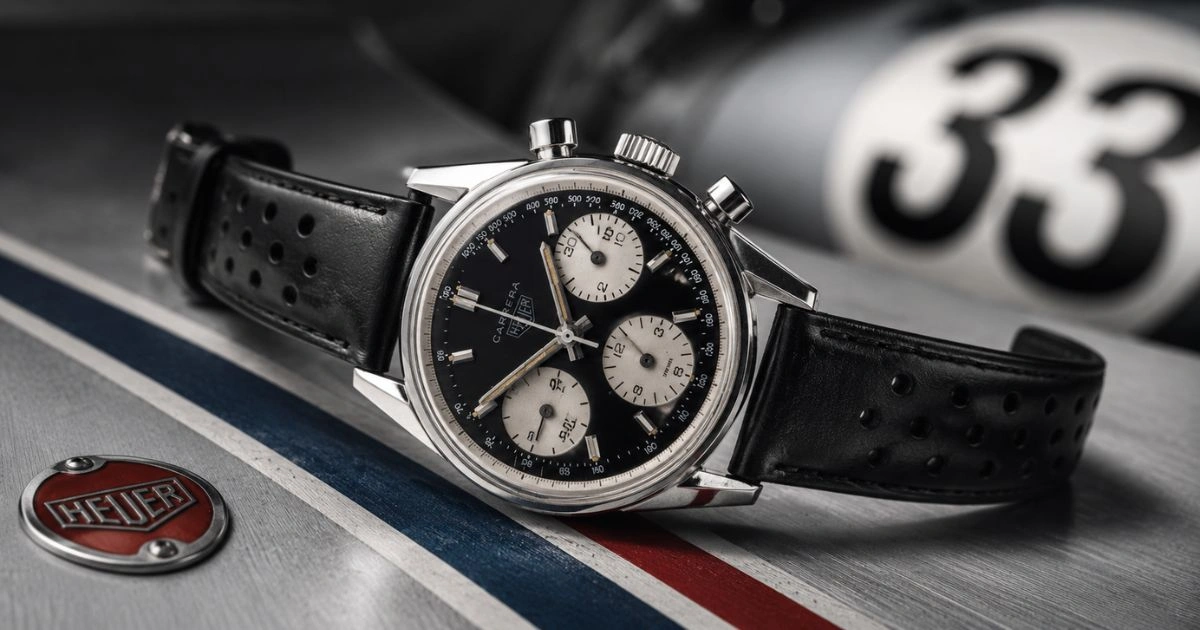
If you have ever found yourself staring at a watch dial covered in small sub-dials, with extra buttons on the side of the case, and wondered, “What exactly does all that do?” — you are looking at a chronograph.
In the world of luxury horology, the chronograph is one of the most beloved and iconic complications. It is a symbol of action, precision, and mechanical complexity. But for the uninitiated, it can look a bit intimidating.
Fear not. Today, we are stripping away the complexity. Welcome to your beginner’s guide to the chronograph.
The Simple Definition: A Stopwatch, But Cooler
At its core, a chronograph is essentially a stopwatch integrated into a wristwatch.
However, calling it just a “stopwatch” feels a bit reductive, like calling a race car “just a vehicle.” A chronograph allows the wearer to measure elapsed time intervals independently of the watch’s timekeeping function. You can be casually telling the time, and with the press of a button, start tracking how long it takes for your espresso to pour or your lap time on the track.
The word itself comes from the Greek chronos (time) and graphein (to write). Interestingly, the very first chronographs literally “wrote” time by using a small pen attached to the hand to mark ink on the dial.
How to Spot a Chronograph
You can usually identify a chronograph from across the room by three distinct visual cues:
1. The Pushers
Look at the side of the watch case. A standard time-only watch has a crown (the winding knob). A chronograph has that crown, plus two additional “pushers” (buttons) flanking it—usually one at 2 o’clock and one at 4 o’clock.
2. The Sub-dials (Totalizers)
The main dial will likely have smaller circles inside it, known as sub-dials. These are the “totalizers.” They track the elapsed minutes and hours. A common layout features a small seconds hand (for the normal timekeeping) at 6 o’clock, a 30-minute counter at 12 o’clock, and a 12-hour counter at 6 o’clock (depending on the design).
3. The Central Seconds Hand
On a normal watch, the thinnest hand ticks constantly to show the current second. On a chronograph, that long, thin central hand is usually parked at 12 o’clock, completely stationary. It will only move when you start the timing function
How Doest It Work?
Operating a chronograph is interactive. It is a mechanical dance between your fingers and the movement.
Here is the standard operating procedure for a simple chronograph:
- Start: Press the top pusher (at 2 o’clock). The large central seconds hand will begin sweeping.
- Stop: Press the top pusher again. The hand halts instantly, allowing you to read the elapsed time.
- Reset: Press the bottom pusher (at 4 o’clock). The hand will snap back to zero, ready to go again.
Inside the watch, this is achieved via a complex system of levers, springs, and clutches. When you press the pusher, you are physically engaging a mechanism that connects the timing function to the gear train. When you reset, “hammers” fall onto heart-shaped cams to instantly return the hands to zero.
Common Terms & Complications (The Jargon)
Once you understand the basics, you will start to see different names attached to chronographs. Here are the three main “types” you should know:
The Monopusher
Before the modern two-pusher layout, there was the monopusher. As the name suggests, it uses a single button (usually integrated into the crown) to start, stop, and reset. It is a more vintage aesthetic, typically requiring more manual dexterity to operate but looks very elegant.
The Flyback
This is a favorite among pilots and watch enthusiasts. In a standard chronograph, to time a second event immediately after the first, you must: Stop -> Reset -> Start. With a Flyback, you simply press the reset button once, and the hand instantly “flys back” to zero and starts running again without stopping. This allows for seamless, continuous timing.
The Rattrapante (Split-Seconds)
This is the Holy Grail of chronographs. These watches have two central seconds hands. When you start it, both hands move together. Press the third pusher (usually at 10 o’clock), and one hand stops while the other continues. You can then “catch up” the stopped hand to the moving one. It is designed to time multiple events that start together but end at different times.
The “Smart” Bezels: Tachymeters & More
You will often see a chronograph with numbers etched around the edge of the dial or bezel. This is a Tachymeter scale. Do not let the math scare you.
Simply put, a tachymeter measures speed based on travel time. If you are traveling one mile (or one kilometer), start the chronograph at the start marker and stop it at the end marker. The position of the seconds hand on the tachymeter scale tells you your average speed.
It sounds like physics homework, but in practice, it is an incredibly elegant analog calculator that requires no battery.
Chronograph vs. Chronometer (Don’t Confuse These!)
This is the most common mistake in watch collecting.
- Chronograph = A function (a stopwatch).
- Chronometer = A certification (a standard of accuracy).
A Chronometer is a watch that has passed rigorous accuracy tests by an official institute (like COSC). A watch can be a chronograph (it has a stopwatch), a chronometer (it is super accurate), both, or neither.
Why Choose a Chronograph?
In an age where we have phones that can time to the millisecond, why do we still love mechanical chronographs?
The Mechanical Theater
The luxury of a chronograph is not just in timing your parking meter; it is in the interaction. There is a tactile joy in pressing a well-engineered pusher. You feel the “click” of the column wheel engaging. You see the smooth, sweeping motion of the hand. It is a connection to a high-performance mechanical machine.
The Aesthetic
A chronograph dial has depth. It is busy, technical, and purposeful. Compared to a minimalist dress watch, a chronograph makes a statement. It suggests that the wearer is active, sporty, and appreciates intricate engineering. It is arguably the most photogenic complication in watchmaking.
Final Thoughts
The chronograph is a complication that truly changed the game. From the racing tracks of Daytona to the lunar surface with the Omega Speedmaster, it is a tool with a rich, romantic history.
If you are looking at adding your first “serious” luxury watch to the collection, a chronograph is an excellent place to start. Yes, it is thicker in the case and more complex to service, but the reward is a rich, interactive experience that a simple three-hand watch just cannot provide.
Do you own a chronograph? Or are you eyeing one for your next purchase? Let me know in the comments below!