
Lume 101: A Guide to Watch Dial Luminescence
There is a specific kind of magic that happens when you walk from a sunlit street into a dark movie theater or a shadowy restaurant. For a moment, you are blind. Then, you glance at your wrist, and there it is: a soft, ethereal glow telling you exactly what time it is. That glow, that unexpected party trick of haute horology, is called lume.
For collectors and newcomers alike, lume is one of those features we take for granted until it fails us. But the history, chemistry, and craftsmanship behind those glowing indices are as fascinating as the most complicated tourbillon. Welcome to Lume 101.
A (Glowing) History Lesson
Before we dive into the modern stuff, we have to address the radioactive elephant in the room. The quest to read time in the dark started dangerously.
The Radium Era (Early 1900s)
In the early 20th century, radium paint was the miracle solution. When mixed with a phosphor (usually Zinc Sulfide), it glowed without needing to be “charged” by the sun. The downside? It was highly radioactive. We all know the tragic story of the “Radium Girls,” the factory workers who ingested the toxic paint while applying it to dials. While vintage radium dials have mostly lost their glow by now (because the radiation destroys the phosphor over time), they are still radioactive. If you buy a vintage piece from the 1950s, a Geiger counter will still sing.
The Tritium Transition (Mid-to-late 1900s)
Eventually, the industry switched to Tritium. While still radioactive, it emits low-energy beta particles that are generally considered safe (as long as you don’t drink the paint). Tritium is identifiable by its ability to glow without charging, though it has a half-life of about 12.5 years. This is why many vintage sports watches from the 80s and 90s now have creamy, yellowed “pumpkin” lume plots—they are essentially worn out and aged.
The Modern Savior: Super-LumiNova
Thankfully, you don’t have to risk radiation poisoning to read your watch in a dark bar anymore. In 1993, Japanese company Nemoto & Associates invented LumiNova. Shortly after, they partnered with Swiss company RC Tritec to create Super-LumiNova.
How does it work?
Super-LumiNova is a photoluminescent pigment (Strontium Aluminate). It is completely non-toxic and non-radioactive. Think of it as a rechargeable battery for light. When UV light (sunlight or even a bright lamp) hits the dial, the material absorbs the energy. When the lights go out, it releases that energy as a visible glow.
Unlike its predecessors, Super-LumiNova is incredibly efficient. It can be up to ten times brighter than older Zinc Sulfide compounds and can glow for hours.
The Big Brand Innovators
While most of the Swiss industry uses various grades of Super-LumiNova, the big players like to put their own spin on the formula.
- Rolex Chromalight : Developed in 2008 for the Deepsea, Chromalight is Rolex’s proprietary in-house lume. While others typically glow green (which the human eye perceives best in the dark), Chromalight famously glows blue. Rolex claims it lasts longer and is more stable than standard lume. After a full charge, you can expect it to be visible for a full night’s dive.
- Seiko Lumibrite : Seiko is obsessed with brightness. Their Lumibrite is a photosensitive pigment that absorbs and releases light with incredible efficiency. If you have ever seen a Seiko diver like the Marinemaster or the modern Prospex line, you know that Seiko lume is often brutally bright. It charges fast and lasts shockingly long.
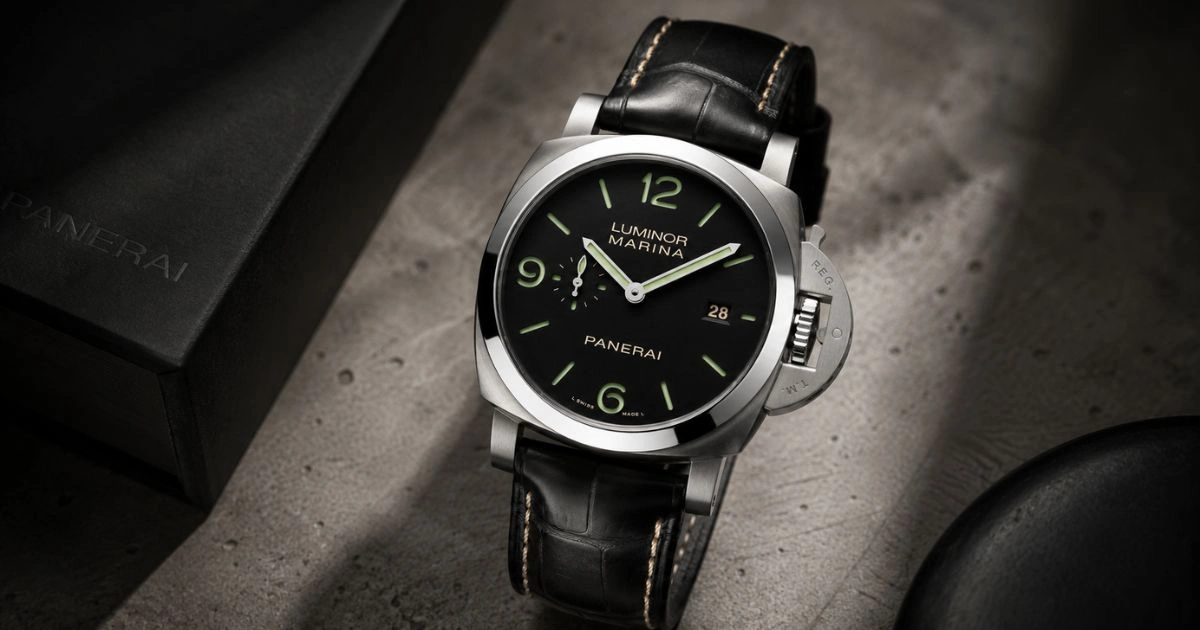
- Panerai : Panerai often uses a specific grade of Super-LumiNova called Old Radium or Fauxtina. It gives the dial a vintage, aged look (brownish/yellow) while providing modern brightness.
Beyond Paint: The Tech Variations
Lume isn’t just about paint anymore.
Tritium Gas Tubes (GTLS)
Some brands, like Ball Watch and Luminox, rejected conventional paints entirely. They use tiny, sealed glass tubes coated with phosphor and filled with gaseous Tritium. Because the gas decays and excites the phosphor from the inside, tritium tubes glow continuously for years without needing any external light source. It’s like having a neon sign on your wrist.
Globalight / Lumicast
Standard lume is painted on. However, brands like Christopher Ward and Bell & Ross have introduced three-dimensional lume. Lumicast (or Globalight) allows manufacturers to create solid ceramic-like blocks of lume. Instead of a painted dot on an index, the entire index is a glowing block. This creates a 3D light effect that doesn’t just shine up at you, but out toward the sides.
Practical Tips for the Collector
Knowing the ingredients is one thing, but here is how you apply this knowledge to your collection.
1. Charge it properly
If your lume looks dim, it isn’t broken—it’s just tired. Super-LumiNova needs a charge. Hold your watch under a desk lamp or in direct sunlight for 5-10 minutes. You will be shocked at how bright it gets.
2. Color matters
Generally, Green (C3) is the brightest and longest-lasting pigment. Blue (BGW9) looks cooler (literally, the color temperature is higher) and is preferred by luxury brands like Rolex and Omega, but it tends to require a higher charge to reach peak brightness compared to green.
3. Surface area is king
A dress watch with thin, painted syringe hands will never glow like a diver. Divers (like the Omega Seamaster or Tudor Black Bay) have massive hands and thick, chunky indices. More surface area means more lume paste, which means more light storage.
4. The modern “Lume Shot”
In the collector community, the “lume shot” (a photo of the watch in the dark) is a proud tradition. However, be wary of photos on Instagram. A UV flashlight (black light) can instantly charge a watch to a blinding level that you will never achieve in real life.
Final Thoughts
Whether it is the icy blue of a Rolex Chromalight or the sunburst green of a Seiko diver, lume bridges the gap between tool and art. It proves that a mechanical object, powered purely by physics and light, can still produce a quiet sense of wonder.
The next time you walk into a dark room, don’t pull out your phone. Just look at your wrist.
What is your favorite “lume monster” in your collection?