
How to Authenticate a Rolex: A Step-by-Step Guide
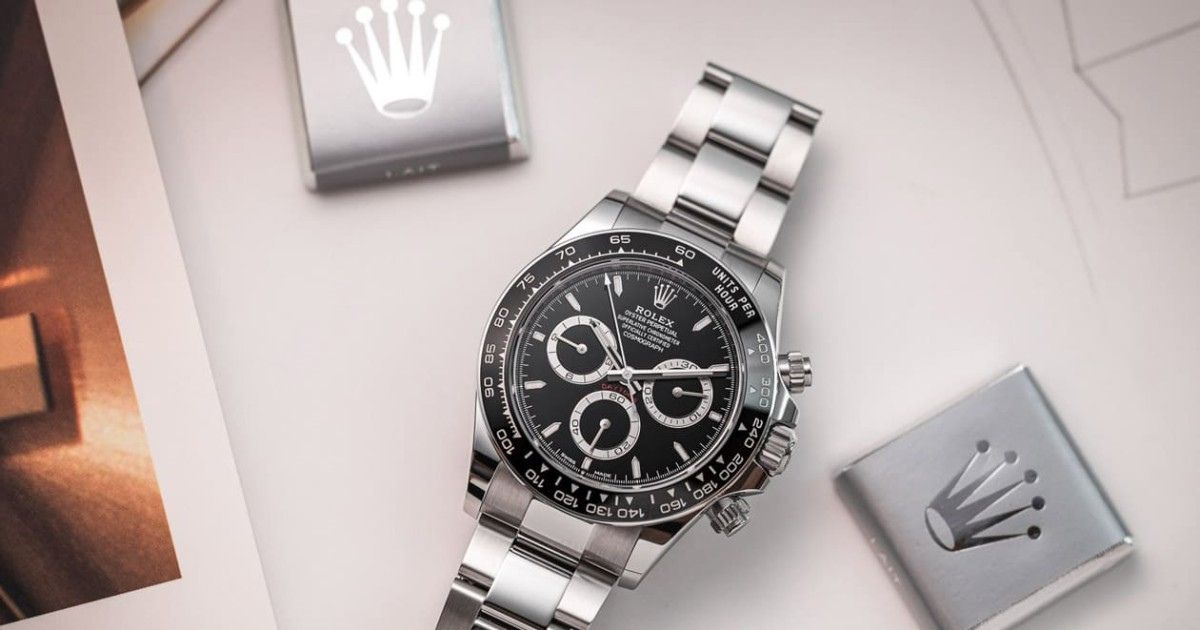
As a blogger who has handled everything from vintage piece es to modern references, I get one question more than any other: “Is my Rolex real?”
The pre-owned market is flooded with sophisticated counterfeits, often called “super fakes.” These aren’t the cheap, ticking fakes of the 1990s; these are high-quality replicas that can fool the naked eye.
However, even the best counterfeits get the details wrong. Rolex is a master of metallurgy and precision machining, and their manufacturing tolerances are incredibly difficult—if not impossible—to copy perfectly.
In this guide, I will walk you through a professional authentication checklist. We will not discuss pricing, as value fluctuates and focusing on physical details is the only way to truly verify a watch. Grab a loupe if you have one, and let’s dive in.
The Weight & The Metal (The “Heft” Test)
Before you even look at the dial, close your eyes and hold the watch in your hand.
- The Authentic Feel: A genuine Rolex is heavy. Not just “solid,” but distinctly dense. Rolex uses 904L Oystersteel (or precious metals like 18k gold). 904L is harder and heavier than the 316L steel used by almost every other watch brand.
- The Red Flag: If the watch feels light, tinny, or like a hollow toy, it is fake. Counterfeiters use cheap alloys to save money. Additionally, examine the edges of the bracelet. On a real Rolex, the brushing is sharp and crisp. On fakes, the edges are often soft or rounded from poor machining.
The Caseback: Plain is Perfect
This is one of the easiest checks for beginners.
- The Authentic Rule: Rolex almost exclusively uses solid, plain metal casebacks. There should be no engravings, logos, or glass display windows on the back (with rare exceptions like the 1908 collection or specific anniversary models).
- The Red Flag: If you see a transparent “see-through” caseback or engravings of dolphins, horses, or deep-sea divers, it is a fake. Many counterfeiters add decorations to the back to make the watch look “special,” but Rolex is known for its utilitarian, clean caseback design.
The Cyclops Lens (The Date Window)
The Cyclops is the magnifying lens over the date. It is a signature Rolex feature, and counterfeits almost always get it wrong.
- The Authentic Feature: A genuine Rolex Cyclops magnifies the date by exactly 2.5 times. When you look at the date straight on, the number should fill the entire window completely. The lens should have an anti-reflective coating that sometimes creates a slight blue glare.
- The Red Flag: If the date looks small, hard to read, or doesn’t fill the bubble, it is likely fake. Also, if the Cyclops is misaligned with the date wheel (cutting off the top or bottom of the numeral), you are looking at a replica.
The Magnum Opus: The Second Hand Sweep
This is where the “heart” of the watch—the movement—reveals itself.
- The Authentic Feature: Rolex mechanical watches beat at 28,800 beats per hour (8 times per second). To the naked eye, this creates a smooth, continuous glide of the second hand. It does not tick; it sweeps.
- The Red Flag: Does the second hand jump in distinct, jerky one-second intervals? That is a sign of a cheap quartz movement (a battery-powered watch). While Rolex made quartz watches in the distant past (Oysterquartz), it is highly unlikely you have stumbled upon one by accident.
Serial & Reference Numbers (The “Engraving Test”)
You will find two numbers on the watch: the Reference Number (at 12 o’clock) and the Serial Number (at 6 o’clock).
- The Authentic Feature: On older models, these are engraved between the “lugs” (where the bracelet meets the case), meaning you have to remove the bracelet to see them. On modern models (post-2005), the serial number is engraved on the rehaut (the inner metal ring between the dial and the crystal).
- The engraving must be razor-sharp. Rolex uses a high-resolution laser or diamond bit.
- On the rehaut, the “ROLEXROLEXROLEX” text should be perfectly aligned with the minute markers. The “X” in “ROLEX” should line up exactly with the center of each hour marker.
- The Red Flag: If the engraving looks like it was burned in with acid (dotted, blurry, or “sandy” texture), it is fake. Also, if the rehaut text is misaligned or the serial number is in the wrong font, run away.
The Crown Logo & Dial Details
Counterfeiters struggle with printing tiny details.
- The Authentic Feature: Apply a magnifying glass to the dial. The gold Rolex crown logo should be perfectly crisp with no bleeding of ink. The text “OYSTER PERPETUAL” and “SUPERLATIVE CHRONOMETER” should be perfectly spaced and crystal clear.
- The Laser Etched Crown (LEC): On most Rolex models made after 2000, there is a tiny laser-etched crown logo at the 6 o’clock position on the crystal. You usually can’t see it with the naked eye; you need to tilt the watch under a bright light. It should not be visible from every angle; it is subtle.
- The Red Flag: If you can see the crown logo easily with the naked eye from a foot away, it is likely a fake (poorly executed). Also, if the text looks bubbly or the spacing between words is uneven, avoid it.
The “Clasp Check”
The bracelet clasp is a hinge mechanism; it is very hard to fake the smoothness of a luxury clasp.
- The Authentic Feature: When you open the clasp, the Rolex engraving should be deep and clean. The clasp should snap shut with a satisfying, solid click, with zero wobble or resistance.
- The Red Flag: If the clasp feels flimsy, if the logo is painted on instead of engraved, or if there are gaps between the clasp and the bracelet links, the watch is counterfeit. On solid gold models, check for “flaking” gold—real gold is solid, not plated.
The Professional Verdict (When to call it quits)
If you have checked all seven steps above and nothing has raised a red flag, you likely have a genuine watch. However, if you are about to spend a significant amount of money, you must visit a professional.
There are “Super Fakes” today that use genuine Swiss movements (ETA clones) and laser-accurate cases. Even experts sometimes need to open the case back to verify the movement. A watchmaker can check the shock absorber, the hairspring, and the specific Rolex patent features inside the movement that no one else is allowed to use.
Final Tip from my Desk: Always read the serial number. If the seller refuses to remove the bracelet to show you the numbers between the lugs (or cannot find them on the rehaut), buy from someone else. The paper and the box are nice, but they can be faked or bought separately. You are buying the watch, not the box. Happy hunting