
The Ultimate Vintage Watch Buying Guide
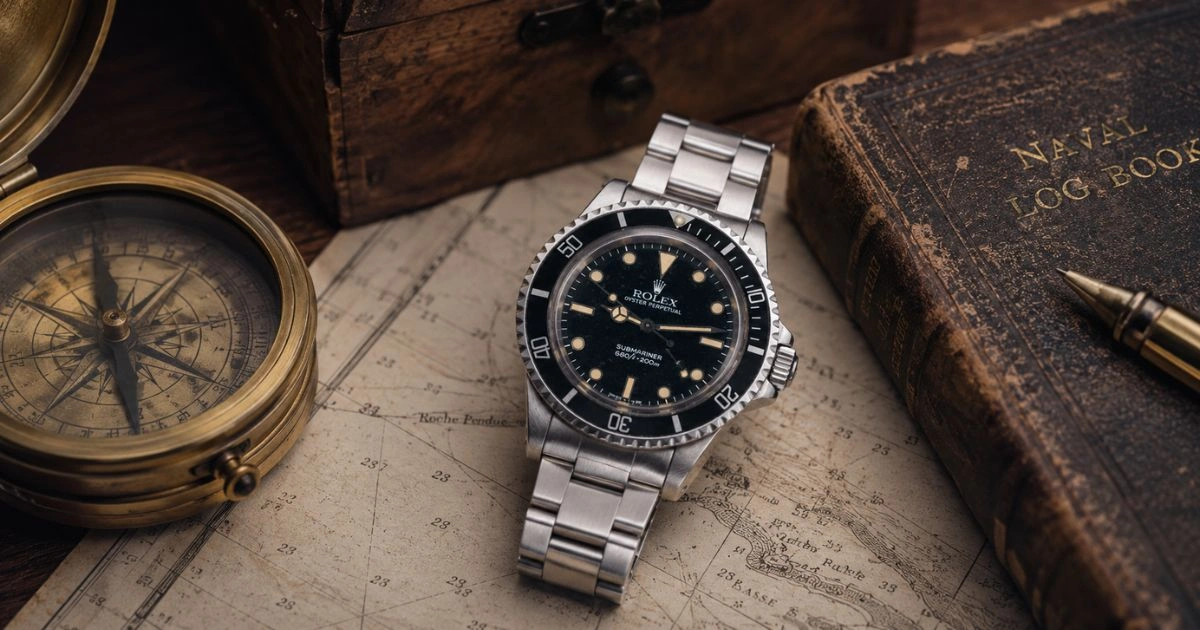
There is a moment in every watch lover’s life when the allure of the new fades, and the soul of the old takes over. You stop lusting after the latest catalog model and find yourself falling down a rabbit hole of “tropical dials,” “patina,” and “pie-pan constellations.” Welcome to the club. Buying a vintage watch is one of the most romantic and rewarding experiences in horology, but let’s be honest: it can also be a minefield.
Unlike buying a new watch from an authorized dealer—where the transaction is sterile and safe—buying vintage is a treasure hunt. It requires patience, education, and a little bit of nerve.
Having sourced, sold, and occasionally been burned by vintage pieces over the last decade, I’ve distilled the collective wisdom of the horological underground (and a few missteps of my own) into this guide. Forget the prices; we are here to talk about value, authenticity, and finding a piece of history you can wear.
Here is your ultimate roadmap to buying vintage.
The Mindset: Player Grade vs. Investor Grade
Before you even look at a photo of a watch, you need to decide who you are. Are you a collector, or are you a curator?
In the world of vintage guitars—a very close cousin to our hobby—there is a concept called “Player Grade” versus “Investor Grade”. An investor-grade guitar sits in a climate-controlled case. It has never been dropped. The lacquer is perfect. A player-grade guitar has been on the road; it has scuffs, repaired cracks, and a neck that has been reset. It has lived.
Vintage watches are exactly the same.
If you walk into this hobby expecting a 50-year-old watch to look like it just left the Rolex or Omega factory, you are going to be disappointed—or worse, you are going to overpay for a watch that has been polished to death and stripped of its character.
The takeaway: For your first few purchases, adopt the “Player Grade” mindset. You are looking for a watch that is mechanically sound and honest. A scratch on the caseback is a story. A soft edge on the lug is only a tragedy if the metal is gone, not just the mirror finish. Be lenient on the things that don’t matter, and ruthless on the things that do.
Condition: The Art of “Vintage Flaws”
Condition is the most subjective part of vintage collecting. What looks like “damage” to a novice looks like “patina” to a connoisseur. However, there is a fine line between beautiful aging and a “dud.”
The Dial (The Face)
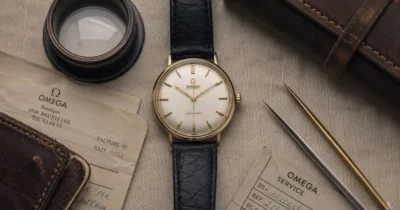
This is where you will spend 90% of your time looking. You want to avoid dials that have been repainted or “refinished” unless you are specifically buying a beater. A refinish destroys the resale value. Look for the text: on a vintage Omega or Rolex, the font should be sharp, not fuzzy.
The “Good” Flaws: Tropical dials (where a black dial has turned a warm, chocolate brown due to UV exposure) and even patina (where the lume plots have turned a consistent cream or pumpkin color) are highly desirable . As the experts at Hodinkee note, sometimes “worsening condition factors can make a watch more valuable”.
The “Bad” Flaws: Look for rot (active corrosion), missing lume, or hazy moisture damage under the crystal that has turned the dial into a moonscape of craters. If the dial edge looks like it has been scraped under a microscope, the watch has likely been “touched up.”
The Case
Is it “unpolished”? In the current market, the word “unpolished” is magic. It means the original bevels and lines are sharp. However, most vintage watches have seen a polishing wheel. A light polish is fine; a “potato” case (where the lugs are rounded and soft) is not. Look at the caseback—if the engravings are faded and unreadable, the watch has been over-polished.
The “Frankenwatch” Problem: Keeping it Original
One of the biggest fears for a new buyer is the “Frankenwatch”—a watch assembled from the spare parts of ten different broken watches. Because vintage watches were serviced in an era before “collectibility” was a thing, watchmakers would often swap hands, crowns, or dials without a second thought.
To avoid a monster, you need to look for consistency.
Do the hands match the dial? If the dial markers have turned a rich, warm yellow (patina), but the hands are bright white, they are likely replacements. Do the serial numbers on the movement match the case reference? There are thousands of forums dedicated to specific references (like the Omega Speedmaster or Rolex Submariner). Research the specific “era” of the watch you want. Learn the difference between a “Sigma dial” and a “Swiss only” dial. This due diligence is the only thing standing between you and a very expensive lesson.
Buying the Seller, Not the Watch
You have probably heard this adage a thousand times, but it bears repeating: Buy the seller. A great photo of a watch can hide a thousand sins.
Vintage watch dealers are the gatekeepers of this hobby. A reputable seller has already done the legwork to ensure the watch is authentic. They have a reputation to protect. As noted across expert guides, established sellers “might command a slight premium for their reputation… but it is worth the extra outlay for buyer’s protection and peace of mind”.
How to vet a seller:
- Ask questions: A good dealer will love that you are curious. If they get defensive when you ask about service history or polishing, walk away.
- Check the warranty: Do they offer a warranty? One year is standard; two years is excellent. This matters because vintage movements are delicate.
- Reddit & Forums: Search the seller’s name on watch forums. The community is small, and word travels fast about bad actors.
The Mechanics & Service History
Here is the cold, hard truth: if you buy a vintage watch, you will likely have to service it. Unless the seller provides a receipt from a recognized watchmaker dated within the last 2-3 years, assume the oils are dry.
Mechanical watches are like classic cars. A 1967 Ford Mustang might run when you buy it, but you wouldn’t drive it across the country without changing the oil. Similarly, a vintage watch might tick, but the amplitude (the swing of the balance wheel) could be dangerously low, causing metal to grind on metal.
- The App: There are apps that use your phone’s microphone to listen to the watch’s heartbeat. They aren’t as accurate as a professional timegrapher, but they can tell you if a watch is running wildly out of spec.
- Parts availability: Some brands (like Omega) are excellent at providing parts for vintage calibers. Others are not. If you buy a watch with a rare, defunct in-house movement, a simple repair could cost as much as the watch. Stick to common calibers (e.g., ETA, Valjoux, or ubiquitous in-house movements like Rolex 1570 or Omega 565) for your first buy.
Provenance and “The Set”
Finally, let’s talk about “Box and Papers.”
Does an original box and papers make the watch better? Yes—it usually increases the value significantly. Does it make the watch run better? No. “A really bad watch with original documentation is still a really bad watch,” warns expert Alan Bedwell.
Provenance is the story. If a watch belonged to a famous pilot, a racing driver, or has a unique engraving, it transcends its physical condition. However, for a first-time buyer, do not sacrifice condition for paperwork. A pristine watch without a box is almost always a better buy than a polished, damaged watch with a full set of papers.
The Final Word: Enjoy the Hunt
The single most important piece of advice for a new collector is to have fun. Don’t rush. The watch that got away is a myth; there is always another one. Set a budget, study the minutiae of the reference you love, and when you finally strap that heavy, scratched, beautiful piece of history onto your wrist, you will realize why we do this.
Vintage watches are time machines. Wear them in good health.