
Blue Dial Watches: Why Are They So Popular?
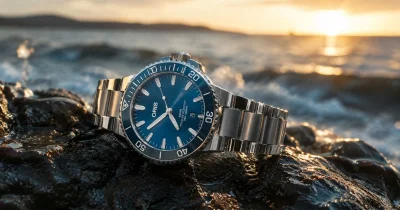
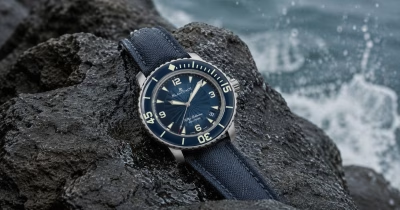
The watch dial is the face of the watch, its most defining feature and the primary canvas for a brand’s artistry. While black and white dials have long been the conventional cornerstones of watchmaking, a new champion has risen to claim its place among the pantheon of horological classics: the blue dial. Once a bold choice, it has become a symbol of refined individuality, seamlessly blending strength and serenity. This isn’t merely a passing trend; it’s a fundamental shift in how we perceive and wear luxury timepieces.
A Brief History of Colour on the Wrist
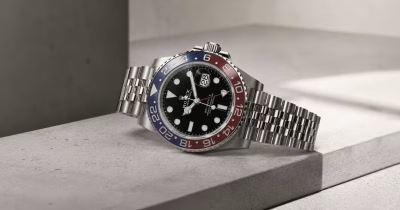
To understand the meteoric rise of the blue dial, we must first look back. Coloured dials are a relatively modern development, with their origins rooted in the 1970s. Initially, vibrant colours like orange and yellow were used on chronographs and dive watches for purely functional purposes, allowing pilots and divers to read the time more quickly and clearly. This practical application, however, inadvertently opened the door for a new era of aesthetic exploration. Watch brands began to break away from their greyscale traditions to experiment with colour, discovering that a dial could be much more than a simple display for time.
Blue, among the spectrum of colours that emerged, proved to be the most versatile and enduring. It is a colour steeped in positive symbolism. It signifies reliability, stability, inspiration, and wisdom—qualities we inherently desire in a timepiece. Furthermore, as a primary colour, it complements almost every other shade, offering a versatility that other hues struggle to match. As high society has become less rigid and more inclusive, the “sporty” blue dial has gained acceptance for almost every occasion, from the boardroom to the red carpet.
The Art and Science of the Perfect Blue
The modern obsession with blue dials is not just about the colour itself, but the incredible variety and complexity of its presentation. Advances in manufacturing techniques have allowed watchmakers to electrify the way they produce this cool shade. One of the most significant innovations is the sunray or sunburst dial. This finish is produced by using a brush, typically with metal filaments, to etch superfine lines radiating from the dial’s centre. Often, layers of enamel are then added to create incredible depth, resulting in a hypnotic play of light that changes with every movement of the wrist. This interplay with light is what gives a blue dial its dynamic, almost living quality.
Beyond sunray, watchmakers employ a myriad of techniques to achieve different effects. There are matte, textured, or glossy finishes, each telling a unique visual story. Some brands, like Grand Seiko, are renowned for their ability to create dials that evoke natural landscapes, such as the soft gradient of the “Atera Valley” blue, which mimics the clear streams of a Japanese river. Others, like H. Moser & Cie, combine the sportiness of a water-resistant case with the traditional craftsmanship of a grand feu enamel dial, creating a fascinating juxtaposition of elements.
A Spectrum of Shades and Craftsmanship
The beauty of the blue dial lies in its remarkable diversity. Blue is not just one colour; it is a vast spectrum. Seiko, for instance, is said to offer 165 variations on the hue. This variety allows for endless creativity, from the deep, inky blue of a lacquered dial to the electric blue of a sunburst finish.
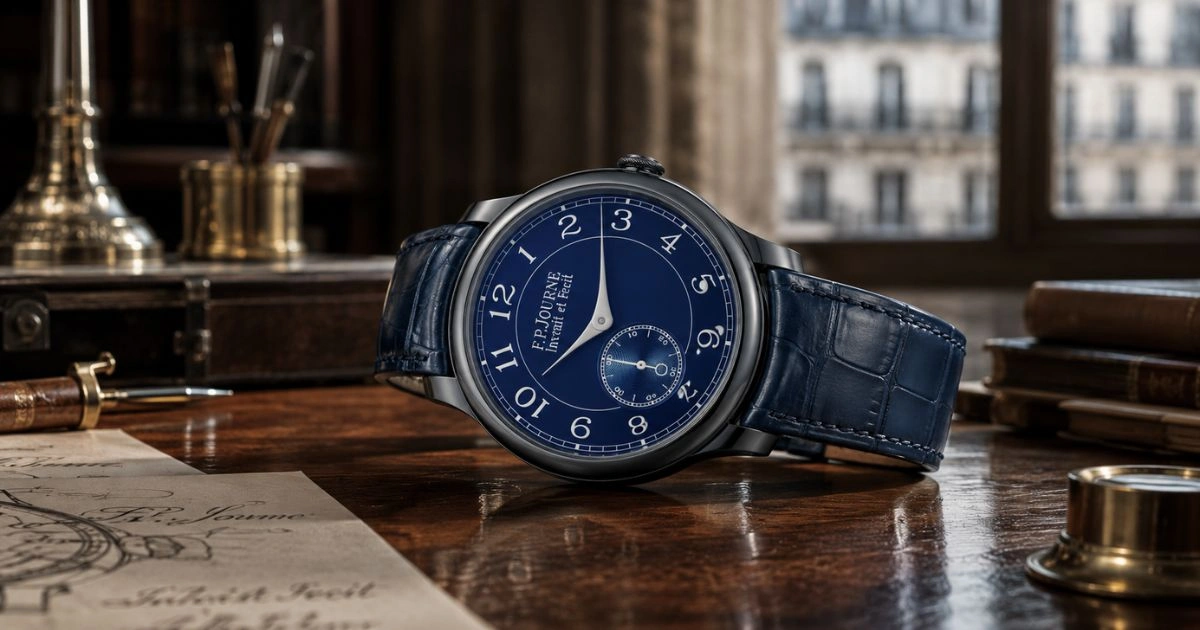
This has led to the creation of some truly exceptional and sought-after timepieces. F.P. Journe’s Chronomètre Bleu is considered by many to have the best blue dial in the business. Its numerous layers of blue lacquer are mirror-polished and hand-applied, resulting in a dial that can appear as inky black or electric blue depending on the light. At the other end of the spectrum, Zenith’s G.F.J. model uses a complex, tri-material dial featuring a basketweave guilloché pattern, a central section made of lapis lazuli, and a blue-dyed mother-of-pearl subdial—a true masterpiece of materials. Louis Vuitton has even employed the plique-à-jour enamelling technique, which is akin to a miniature stained-glass window, to create breathtakingly airy blue dials.
Why Blue is the New Black
The popularity of the blue dial can be attributed to its unique ability to be both bold and timeless. It offers a refreshing visual change for those accustomed to more conventional dial colours. It is expressive yet soft enough to feel graceful in any setting, enhancing an outfit without overpowering it. A blue dial watch can be a statement of confidence, representing calmness and clarity. It’s a versatile choice that transitions seamlessly from a professional setting to a casual dinner. This harmony of colour and subtlety gives the blue dial its distinctive allure—it doesn’t demand attention, but it naturally receives it through its effortless charm. It’s no wonder that Bonhams, the auction house, noted that blue-dial watches generally achieve prices 10% to 20% higher than their black-and-white counterparts, proving that the market’s desire for this colour is stronger than ever.