
The Panerai Luminor: How a Radiomir Evolution Became an Icon
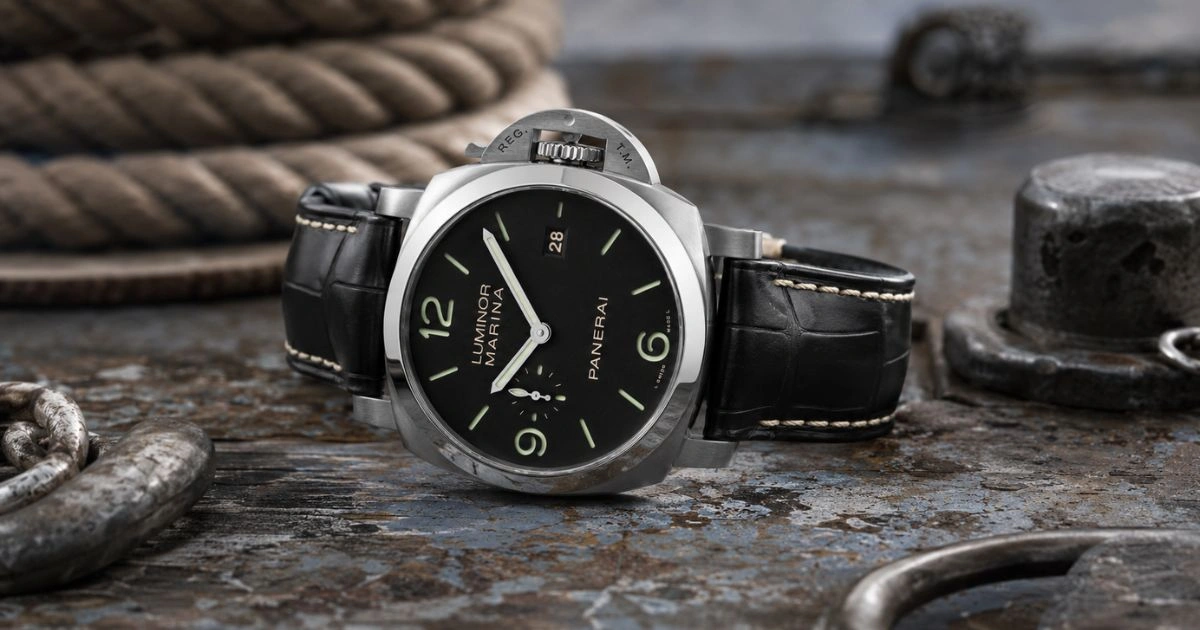
In the vast universe of horology, there are few shapes as instantly recognizable as the Panerai Luminor. With its formidable cushion case, the distinctive crown-protecting bridge, and a dial that prioritizes legibility above all else, it is an object of pure function that has transcended its utilitarian origins to become a design icon. To understand the Luminor is to understand a story of military necessity, technological evolution, and a rather fortuitous encounter with Hollywood.
The Radiomir Genesis: Laying the Groundwork
The story of the Luminor cannot be told without first acknowledging its predecessor, the Radiomir. The Panerai saga began in Florence in 1860, when Giovanni Panerai opened a watchmaking workshop that would eventually become the official supplier of precision instruments to the Royal Italian Navy. The first major breakthrough came in the 1930s with the Radiomir, a name derived from the radium-based luminous paste developed by the brand. This substance allowed for unprecedented visibility in the dark waters where Italian frogmen operated.
The earliest Radiomir prototypes, developed in collaboration with Rolex in 1936, featured a generous 47mm cushion-shaped case, wire lugs, and a simple, ultra-legible dial. These were tools, not luxury items, designed to be strapped over a diving suit. While the Radiomir was revolutionary for its time, it had its limitations. The wire lugs, while functional, were a potential point of failure, and the water-resistance, while good for the era, needed improvement for the rigors of combat diving.
The Birth of an Icon: The Luminor Arrives
In the late 1940s, Panerai introduced two pivotal innovations that would define the brand’s future. The first was the development of a new, safer self-luminous substance based on tritium. This new material, patented in 1949, replaced the radioactive radium and was simply named “Luminor”. This technological leap gave the brand a new name and a new identity.
The second innovation was the introduction of the crown-protecting bridge. This design, featuring a movable lever that clamps the crown tightly against the case, was a stroke of genius. It dramatically improved water resistance and protected the crown from accidental shocks or damage. When the new “Luminor” watch was released in 1950, it combined this new luminous material with the robust crown guard, creating a watch that was not only more reliable but also more aesthetically formidable than its predecessor. The iconic silhouette was born.
Design DNA: The Anatomy of a Legend
The visual appeal of the Luminor is rooted in its function. Every design element serves a specific purpose, and this purity of intent has created an enduring aesthetic.
The Crown-Protecting Bridge: This is the single most recognizable feature of the Luminor. It is not just a stylistic flourish; it is a functional device that ensures the watch’s water resistance and protects the winding mechanism. It is the “essence of Panerai,” a symbol of the brand’s tool-watch heritage.
The Cushion Case: The rounded, square-like case is a direct descendant of the Radiomir but was made more robust for military use. While many modern Luminor models measure 44mm, the design has been scaled up and down over the decades, with 47mm versions like the PAM01735 referencing the bold dimensions of the original historic models.
The Sandwich Dial: While not exclusive to the Luminor, the “sandwich” dial is a hallmark of the collection. It consists of two layers: the top layer with cut-out hour markers and numerals, and a bottom layer coated with luminous material. This construction allows for a massive amount of lume, ensuring maximum underwater legibility. Archival-inspired models like the Luminor Marina PAM01759 highlight this detail with a domed sapphire crystal that adds a vintage feel.
From Military Tool to Global Phenomenon
For decades, the Luminor was exclusively a military secret, unavailable to the public. That changed in 1993 when Panerai finally launched its first civilian collection, a move that brought the Luminor to the broader public for the first time. But it was an unexpected event in 1995 that truly launched the Luminor into the stratosphere of luxury watch fame.
While filming the movie Daylight in Italy, Sylvester Stallone discovered the Panerai Luminor in a boutique. He purchased several, wearing one in the film and gifting others to friends, including Arnold Schwarzenegger. Stallone’s endorsement gave the Luminor an aura of rugged, action-hero cool that immediately resonated with collectors. The watch, once a tool for elite divers, became a symbol of bold, unapologetic style.
A Legacy of Innovation and Refinement
The Luminor’s success is not solely based on its past. Panerai has continually pushed the boundaries of materials and movement technology while respecting the design’s core DNA. The brand has utilized innovative materials like Carbotech, Fibratech, and ceramic for cases. Inside, movements like the P.9010 calibre offer modern reliability and a 72-hour power reserve, while more complex models feature GMT, power reserve, and even tourbillon complications.
Panerai has also cultivated a unique relationship with its fan base, the “Paneristi,” a community that has grown from a small online group to a global network of over 30,000 enthusiasts. The brand has often collaborated with this community, creating special editions that reward their loyalty and passion, further cementing the Luminor’s status as a collectible icon.
Conclusion
The Panerai Luminor’s journey from a specialized military instrument to a global luxury icon is a testament to the enduring power of purposeful design. It evolved from the Radiomir by solving a specific problem and, in doing so, created an aesthetic language so powerful and original that it transcended its original purpose. The Luminor isn’t a watch that follows trends; it is a watch that is defined by its history and celebrated for its unwavering identity. It is a perfect reminder that true design, born of necessity, can become timeless.