
The Reverso at 90: How a Polo Watch Became an Icon
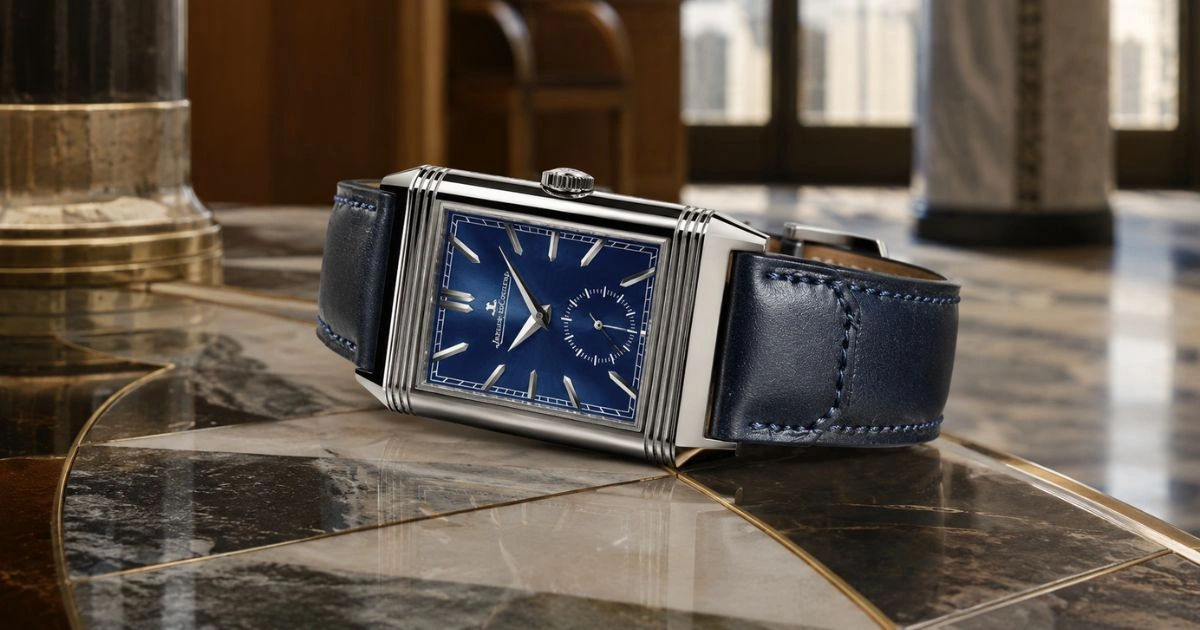
There are few watches in the world that are as instantly recognizable as the Jaeger-LeCoultre Reverso. It is a watch that defies easy categorization. Is it a sports watch? Certainly, its origins lie in the rough-and-tumble world of polo. Is it a dress watch? Unquestionably, its sleek Art Deco lines have made it a staple of refined elegance for nearly a century.
At its 90th anniversary, the Reverso stands as a testament to the power of a singular, brilliant idea—an idea that was not just about telling time, but about protecting it. This is the story of how a watch designed for the polo fields of India became an icon of 20th-century design and a canvas for the highest forms of horological art.
A Challenge of the Polo Fields
The genesis of the Reverso is one of the great origin stories in watchmaking. The tale begins in 1930 in India, a country where polo was not just a sport but a social cornerstone for British army officers and the local nobility. Swiss businessman César de Trey was visiting the country when he was presented with a problem by the officers. The rigours of a polo match—the jarring impacts, the flying polo balls—were smashing the crystals of their wristwatches. They needed a timepiece that could withstand the game’s brutality.
De Trey took the challenge back to Switzerland. He partnered with Jacques-David LeCoultre of the famed LeCoultre manufacture, who in turn enlisted the help of French industrial designer René-Alfred Chauvot. On 4 March 1931, Chauvot filed a patent for a “wristwatch which can slide on its base and flip over on itself”. The solution was as simple as it was revolutionary: instead of trying to reinforce the glass, they would make it disappear. The Reverso’s ingenious swivelling case allowed the wearer to flip the watch over, protecting the delicate dial with a solid metal caseback.
The Spirit of an Era: Art Deco and the Sporting Gentleman
The Reverso was born of a specific era—the vibrant, transformative years of the 1920s and 1930s. Known as the Roaring Twenties, the Jazz Age, or les années folles, this was a time of unprecedented social change, economic boom, and a celebration of modernity. It was also the era of Art Deco, the design movement that would define the Reverso’s aesthetic.
The 1925 Exposition des Arts Décoratifs in Paris gave the movement its name, but the style quickly spread globally, influencing everything from architecture and fashion to graphic art and industrial design. The Reverso was a perfect distillation of the Art Deco principles: geometric precision, clean lines, and a streamlined elegance that spoke of a bright new future. Its rectangular form was a bold departure from the round pocket watches and early wristwatches of the time. The distinctive gadroons on the case, the stepped triangular lugs, and the overall sense of balance—often cited as being based on the Golden Ratio—all sang with the harmony of the machine age.
This was also the age of the “sporting gentleman.” Men of means embraced leisure activities like golf, tennis, and motor racing, and they needed watches that could keep up with their active lives. The Reverso, “for town and sport” as it was marketed, fit this new lifestyle perfectly. It was a tool for the elite, a symbol of performance and style, as much at home in the boardroom as on the pitch.
The Revival: From Afterthought to Icon
Despite its brilliant design, the Reverso’s journey to icon status was not a straight line. As the decades passed and tastes changed, Art Deco fell out of favour. The Reverso was eventually discontinued, seemingly destined for the history books.
However, a revival was on the horizon. In the 1970s, a renewed appreciation for Art Deco began to emerge, and the Reverso was resurrected. A pivotal moment came in 1976, when Italian distributor Giorgio Corvo discovered a cache of Reverso cases in the Manufacture’s archives and convinced the brand to relaunch the model. The timing was perfect. The watch’s timeless elegance and its status as a symbol of subtle, sophisticated luxury resonated with a new generation.
The Reverso’s true renaissance, however, came in the 1990s. In the wake of the quartz crisis, Jaeger-LeCoultre chose the Reverso to showcase its mastery of traditional mechanical watchmaking. The 60th anniversary in 1991 was a turning point with the launch of the Reverso Soixantième, which reintroduced mechanical complications to the model. This paved the way for a stunning array of new movements and complications, from tourbillons and minute repeaters to chronographs and perpetual calendars—all ingeniously housed within the Reverso’s now-iconic rectangular case.
A Canvas for Creativity and Innovation
The Reverso’s unique design has always invited creativity. What began as a purely functional protective caseback quickly became a canvas for personalization. Jaeger-LeCoultre began offering engravings, family crests, and miniature enamel paintings. This tradition continues today, with master artisans using the Reverso as a medium for exquisite métiers d’art, including enamelling, guillochage, and miniature painting.
The pinnacle of this creative and technical exploration is arguably the Reverso Hybris Mechanica Calibre 185 ‘Quadriptyque’ from 2021. This masterpiece features four dials and 11 complications, including a flying tourbillon, a perpetual calendar, a minute repeater, and multiple astronomical displays. It demonstrates how the Reverso has evolved from a simple idea—a watch for polo—into one of the most complex and celebrated platforms in all of horology.
As the Reverso celebrates its 90th anniversary, it remains as relevant as ever. It is a rare example of a design that is both modern and timeless, functional and artistic, a sports watch and a dress watch. The Reverso’s true genius lies not just in its ability to flip, but in its ability to endure.