
What is a Chronograph? A Beginner’s Guide
If you are new to the world of mechanical watches, you have likely heard the term “chronograph” thrown around a lot. You might even know that it has something to do with a stopwatch. But if you look at a watch like the Omega Speedmaster or the Rolex Daytona, you will see extra buttons on the side of the case and small sub-dials on the main face. It can look a bit intimidating.
Don’t worry. Today, we are going to demystify the chronograph.
As a complication, the chronograph is arguably the most useful and interactive feature you can have on a luxury wristwatch. It is also one of the most engineered. By the end of this guide, you will not only know what a chronograph is, but you will also understand how to use one and be able to spot the differences between a simple stopwatch and a high-end rattrapante.
The Definition: More Than Just a Stopwatch
Let’s start with the basics. The word chronograph comes from the Greek words chronos (time) and graph (to write). Historically, the earliest chronographs would actually “write” time onto a paper using a small pen attached to the hand. Today, they don’t write on paper, but they do “record” time.
A chronograph is simply a watch that has an integrated stopwatch function. However, the magic of horology is that this stopwatch function is entirely independent of the main timekeeping. You can time a lap on the racetrack or a minute on the pasta without affecting the accuracy of the actual time of day.
Crucial Note: Do not confuse a Chronograph with a Chronometer.
- A Chronograph is a function (a stopwatch).
- A Chronometer is a certification (a watch that runs very accurately).
A watch can be both—many luxury chronographs are COSC-certified chronometers—but they are not the same thing.
Anatomy of a Chronograph
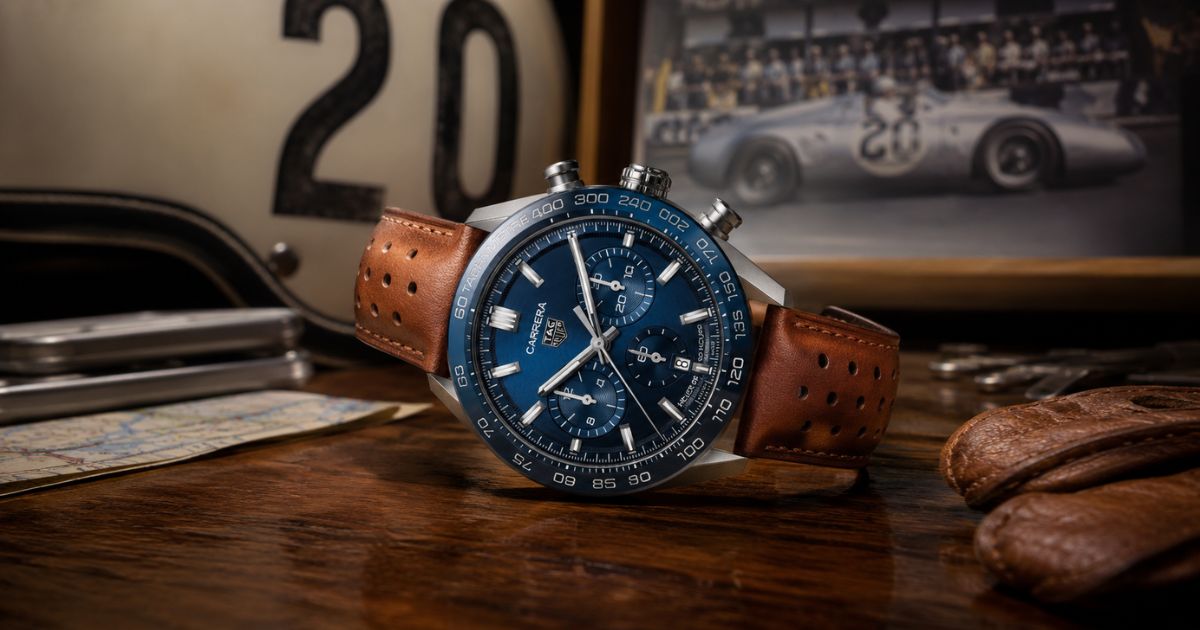
How can you spot a chronograph from across the room? Look for these three distinct physical traits:
1. The Pushers
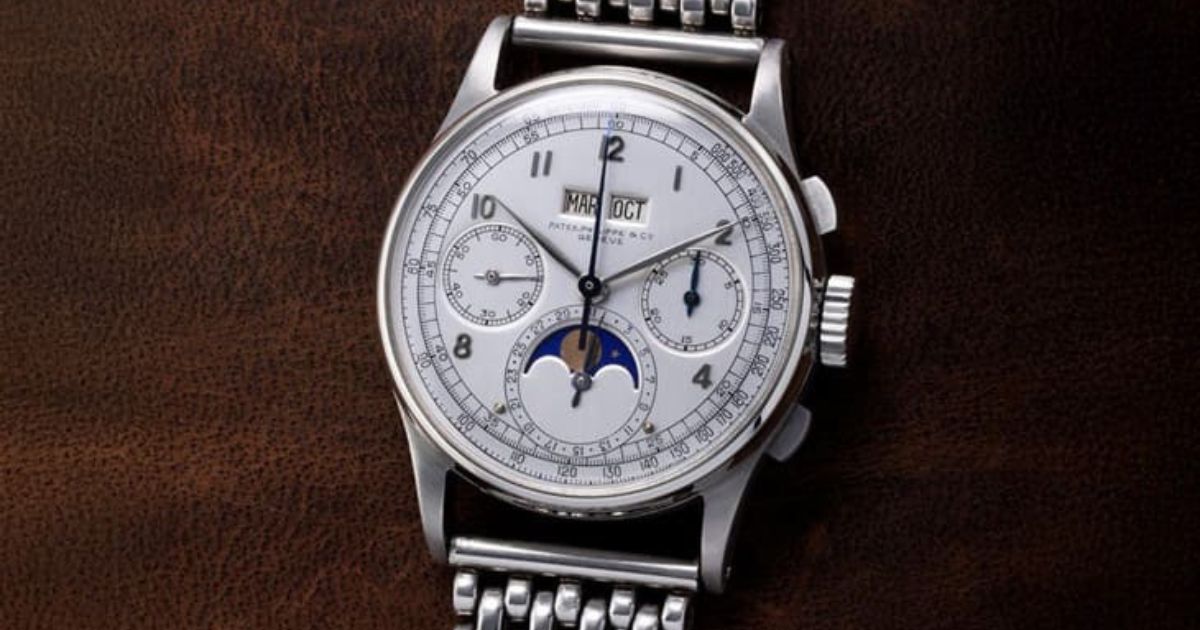
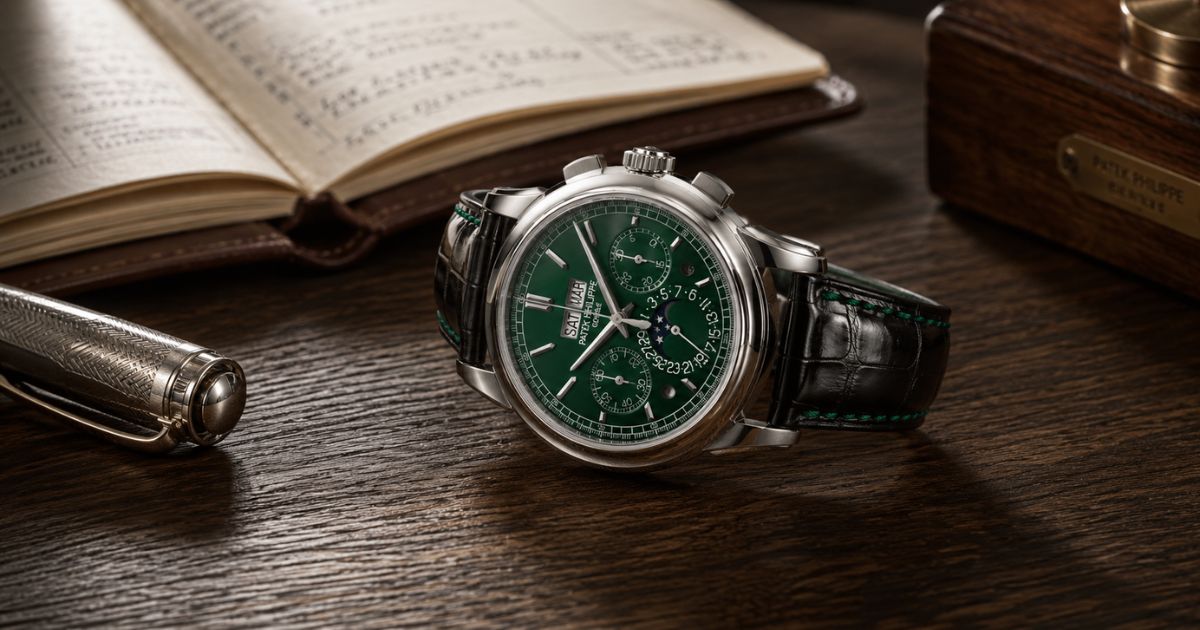
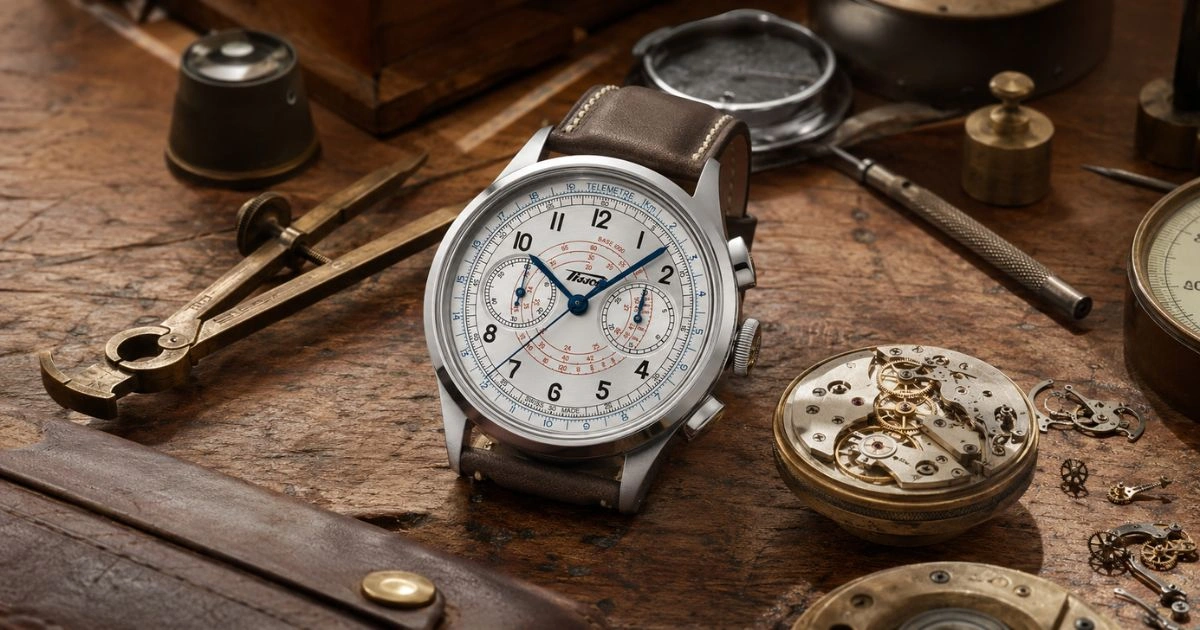
Chronographs usually have two extra buttons on the side of the case, flanking the winding crown.
- The Start/Stop (Top): Located at 2 o’clock. Press once to start timing; press again to stop.
- The Reset (Bottom): Located at 4 o’clock. This returns the hands to zero only when the chronograph is stopped.
2. The Central Chronograph Hand
On a standard watch, the thinnest, longest hand is usually the running seconds. On a chronograph, that long hand is usually the stopwatch seconds hand. It stays locked at 12 o’clock until you press the top pusher to start it.
3. The Sub-dials (Registers)
These are the smaller circles within the main dial. They are the “totalizers.” You will usually see:
- Minutes Register: Usually located at 3 or 9 o’clock. This counts how many minutes have elapsed (often 30 minutes).
- Hours Register: Usually at 6 or 12 o’clock. Counts elapsed hours (often 12 hours).
- Small Seconds: Usually at 6 or 9 o’clock. This is not part of the stopwatch. This is just the normal running seconds hand for the watch itself.
How to Use It: A Step-by-Step Guide
If you have a chronograph in your collection but have been afraid to touch the buttons, follow these three steps:
- Start: Press the top pusher. Watch the large central seconds hand begin to sweep. This is the timer running.
- Stop: Press the top pusher again. The hand halts instantly, showing you exactly how much time has passed (e.g., 15 seconds).
- Reset: Press the bottom pusher. The hand will snap back to the 12 o’clock position, ready to go again.
Pro-Tip: Look at your sub-dials. If you let the chronograph run for two minutes, the large hand will have gone around twice, but the minute register sub-dial will now point to “2.”
The Major Variations
Not all chronographs are created equal. Once you master the basic “Start-Stop-Reset,” you should look at these three major mechanical variations found in luxury watches.
The Monopusher
Most chronographs have two buttons. A Monopusher has only one button (usually built into the crown). This was the original style of chronograph. One button does everything: Start, Stop, Reset. It is rarer and often more aesthetically elegant because it keeps the case side clean.
The Flyback
The Flyback is the pilot’s best friend. On a standard chronograph, to time a second event immediately after the first, you must: (1) Stop, (2) Reset, (3) Start. With a Flyback, you simply press the bottom pusher once while it is running. The hand instantly “flies back” to zero and starts running again without any lost time.
Best for: Racing or cooking where every second counts.
The Rattrapante (Split-Seconds)
This is the Holy Grail of chronographs. Look for a third pusher, usually at 10 o’clock. The Rattrapante has two overlapping central seconds hands.
You start the timer, and both hands move together. Press the third pusher, and one hand stops while the other keeps moving. Press it again, and the stopped hand “catches up” to the running one.
Best for: Timing two different competitors in a race (e.g., Lap times for Driver A vs. Driver B).
Beyond Timing: The Bezels
Sometimes the dial of a chronograph looks incredibly busy. You might see numbers going around the edge of the dial or bezel that go up to 400 or 500. These are scales, and they turn your stopwatch into a calculator.
- The Tachymeter: The most common (found on the Rolex Daytona). It measures speed. If you travel 1 kilometer, start the chronograph, and stop when you reach 1km; where the hand points on the tachymeter scale is your speed. If it took 30 seconds, you were going 120 km/h.
- The Telemeter: Measures distance. Start it when you see lightning, stop it when you hear thunder. The scale tells you how far away the storm is.
- The Pulsometer: A medical tool. Start the chronograph and count 30 heartbeats. Stop it. The scale tells you the patient’s heart rate.
A Note on Mechanics: Automatic vs. Manual
Finally, for the budding collector, know that chronographs are incredibly complex to manufacture.
- Manual Wind: Many purists prefer manual-wind chronographs (like the original Omega Speedmaster). Because the mechanism is thick, removing the automatic rotor allows you to see the entire movement architecture. You have to wind it every few days, but it offers a connection to the watch.
- Automatic: The Zenith El Primero was one of the first automatic chronographs. It is convenient, but the mechanism is a miracle of micro-engineering, fitting a heavy rotor and a stopwatch function into a slim space.
Conclusion
The chronograph is the ultimate expression of the mechanical watch. It is interactive; you can feel the resistance of the pushers and watch the gears jump. While a simple three-hand watch tells you the time, a chronograph records life’s moments.
Whether you time your morning espresso or just enjoy the mechanical ballet of the movement through a display caseback, the chronograph turns the wristwatch from a passive tool into an active instrument.