
A Beginner’s Guide to Vintage Watch Terminology
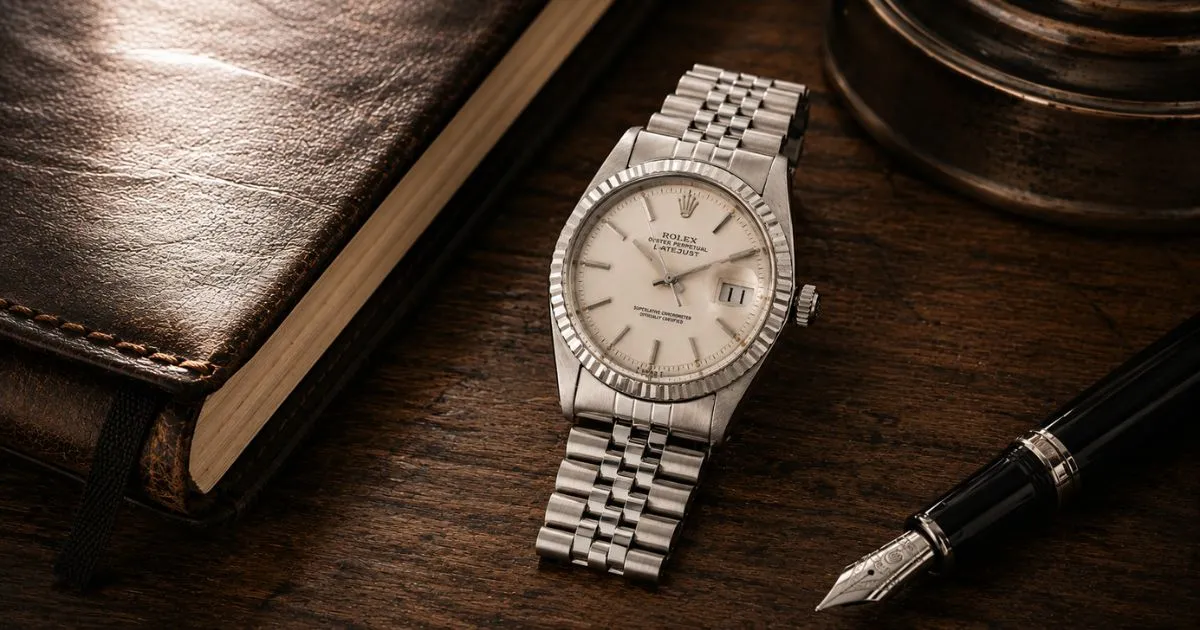
If you are new to the world of vintage watches, walking into a dealer’s shop or scrolling through an online forum can feel like you’ve stumbled into a secret society with its own language.
Collectors throw around words like “patina,” “franken,” or “grail” as if they are common knowledge.
But don’t let the jargon intimidate you. Understanding these terms is the first step toward unlocking this incredible hobby. Once you learn the vocabulary, you will not only protect yourself from a bad purchase but also deepen your appreciation for the mechanical art on your wrist.
Welcome to your crash course in Vintage Watch 101. Let’s decode the language of horology.
The Basics: Anatomy of a Watch
Before we dive into condition and movement types, let us establish the parts of the watch itself. You will see these words in every listing.
- Case: The metal housing that protects the movement inside. This is the body of the watch.
- Dial: The actual face of the watch (usually made of metal) that displays the hours, minutes, and seconds.
- Crystal: The transparent cover that protects the dial. On vintage pieces, this is often acrylic (plastic) rather than modern sapphire. Acrylic scratches easily but is just as easily polished back to clarity.
- Crown: The little knob on the side of the case used to wind the watch and set the time.
- Lugs: The protruding metal pieces (upper and lower) where the strap or bracelet attaches to the case.
- Bezel: The ring surrounding the crystal. On divers, this is often rotatable to track elapsed time.
The Heart of the Matters: Movements
The “movement” is the engine of the watch. There are three main types you will encounter.
- Mechanical (Hand-Wound): The oldest style. You must turn the crown manually every day or two to wind the mainspring, which powers the watch. You will hear collectors say they love the “ritual” of winding their watch every morning.
- Automatic (Self-Winding): A mechanical watch that winds itself using the natural motion of your wrist. If you wear it daily, you never need to wind it by hand. However, if left sitting for two days, it will stop.
- Quartz: Powered by a battery. While ubiquitous today, quartz watches revolutionized (and disrupted) the industry in the 1970s. In the vintage world, quartz is often less desirable to mechanical purists, though early quartz models from brands like Seiko are highly collectible.
Complications: More Than Just Time
Any feature on a watch beyond the simple display of hours, minutes, and seconds is called a complication. The more complications, the more complex (and often valuable) the watch.
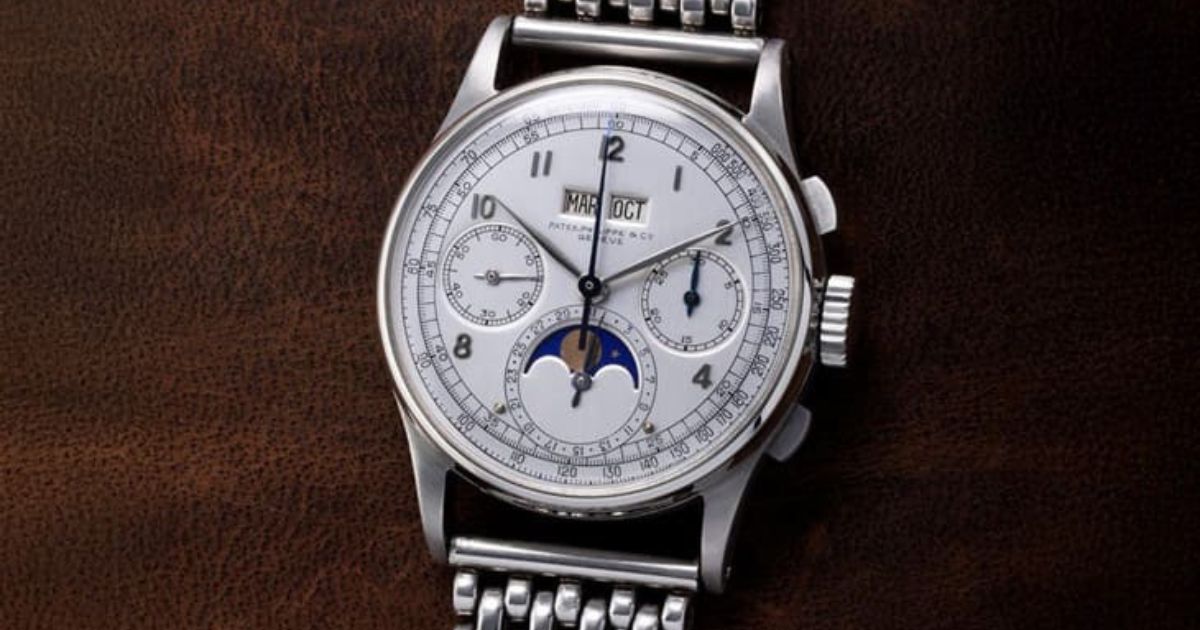
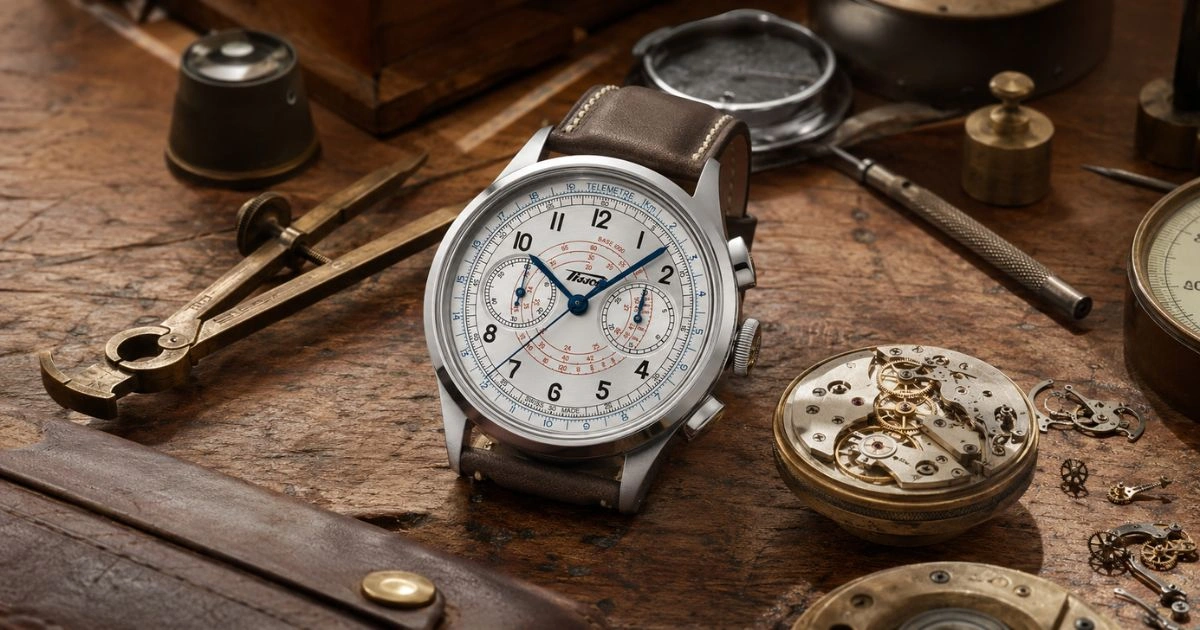
- Chronograph: A stopwatch function. You will recognize it by the extra sub-dials on the face and the two extra pushers on the side of the crown. The name comes from Greek meaning “time writer”.
- Chronometer: Do not confuse this with Chronograph. A chronometer is not a function; it is a certification. It means the movement has passed rigorous accuracy tests. It is a stamp of precision.
The Spectrum of Condition: NOS, Mint and Patina
This is the most critical section for a buyer. Condition dictates value more than anything else.
- NOS (New Old Stock): The holy grail of condition. This refers to a vintage watch that has never been sold or worn. It is essentially a brand new watch that sat in a drawer for 50 years. It should have zero scratches and all original parts, often with the original tags and box.
- Mint: A watch that looks new but has likely been worn. It may have very slight hairline scratches from age, but no significant damage or polishing.
- Patina: This is a big one. Patina refers to the natural discoloration or aging of the dial or lume (the glowing material on hands/markers) over decades. It can turn white paint into cream, yellow, or even “tropical” brown. Collectors love patina—it proves the watch is authentic and aged naturally. However, it is a fine line between “beautiful patina” and “damage”.
Red Flags: What to Avoid
Knowing the “bad” words is just as important as knowing the “good” ones.
- Franken (Frankenstein): A watch assembled from parts of various different donor watches. For example, a Rolex case, a Longines crown, and a generic dial. Unless it is a custom “mod,” this usually destroys the value of a vintage piece.
- Redial (Refinished Dial): When the original dial paint fades, someone might repaint it. Unless done by the original factory, a redial significantly reduces the value. It is very hard to do perfectly, and poor printing is a dead giveaway.
- Replacement Parts: Parts like crowns and hands wear out. Sometimes they are replaced with generic parts. For serious collecting, you want parts that are original to the brand and era.
The Collector’s Lexicon
- Grail: Your dream watch. The one that ends the search. It is not just an expensive watch; it is usually rare and hard to find—a “white whale.” For some, it is a Patek Philippe; for others, a specific 1970s Heuer.
- Tropical Dial: A specific type of patina where a black dial has turned a warm, chocolate brown due to UV exposure over decades. These are highly sought after and command high premiums.
- Tool Watch: A watch originally designed for a specific job (diving, flying, racing). Think Rolex Submariner or Omega Speedmaster. They are valued for their rugged utility and historical significance.
Final Thoughts
The world of vintage watches is a journey. The more time you spend looking at dials and reading listings, the more natural this language will become.
Next time you see a listing for a “vintage 1960s manual-wind chronograph with a tropical dial and nice patina,” you will know exactly what is being said.
Happy hunting.