
Your First Rolex: A Beginner’s Buying Guide
There is a moment in every watch enthusiast’s journey that feels different from the rest. It is the moment you stop just looking at the display case and start thinking, “It’s time.”
Buying your first Rolex isn’t just a transaction; it is a rite of passage. For over a century, the Crown has stood as the benchmark for luxury, durability, and status. But let’s be honest—walking into that boutique or opening that trusted dealer’s website can be intimidating.
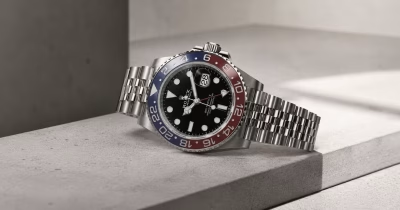
With decades of heritage, countless nicknames (“Pepsi,” “Hulk,” “Panda”), and a market that moves faster than most, how do you know where to start?
This guide is for you. We are going to strip away the noise and focus on the fundamentals of selecting, sourcing, and securing your first Rolex.
Why Rolex? The Case for the Crown
Before we look at steel vs. gold, or vintage vs. new, we need to address the “why.”
Other brands offer incredible craftsmanship. Patek Philippe has the pedigree, Omega has the history, and Audemars Piguet has the design language. But Rolex sits in a unique sweet spot.
First, there is durability. A Rolex is not a safe queen. The Oyster case, invented in 1926, was the world’s first waterproof wristwatch case. These are tools built to last generations. You can buy a Submariner today, wear it every single day for forty years, service it regularly, and hand it down to your child in perfect working order.
Second, there is recognition. A Rolex signals a certain level of success and taste universally. It crosses cultural and linguistic barriers. But perhaps most importantly for a first-time buyer, there is value retention.
While most luxury goods lose 20% to 40% the moment you walk out of the store, a Rolex—specifically stainless steel professional models—tends to hold its value incredibly well.
The Golden Rule: Acknowledge the Market Reality
Let’s address the elephant in the room immediately: You cannot walk into most official dealers and buy the exact watch you saw on Instagram.
The market is split into two distinct ecosystems: The “Green” (Official) Market and the “Grey” (Secondary) Market.
Official Rolex Retailers (The Green Market) are the only places authorized to sell a new watch. They offer the full “unboxing experience”—the green box, the five-year international guarantee, and the peace of mind of authenticity. However, for high-demand models like the Daytona or Submariner, the waiting lists are notoriously long. You may wait years.
The Grey Market (Secondary Dealers) is where most first-timers actually get their watch. These are pre-owned or unworn watches sold by independent dealers. The benefit is availability. If you want a specific reference number today, the grey market can provide it. The drawback? Prices fluctuate based on hype.
Advice for the beginner: Do not dismiss the pre-owned market. Buying a watch that is two or three years old often allows you to skip the waitlist and the initial depreciation hit.
The “Big Three” Gateway Models
If you search online for “best first Rolex,” you will find endless debates. To simplify, we have identified the three pillars of Rolex ownership. Every beginner should start here.
1. The All-Rounder: Rolex Datejsut
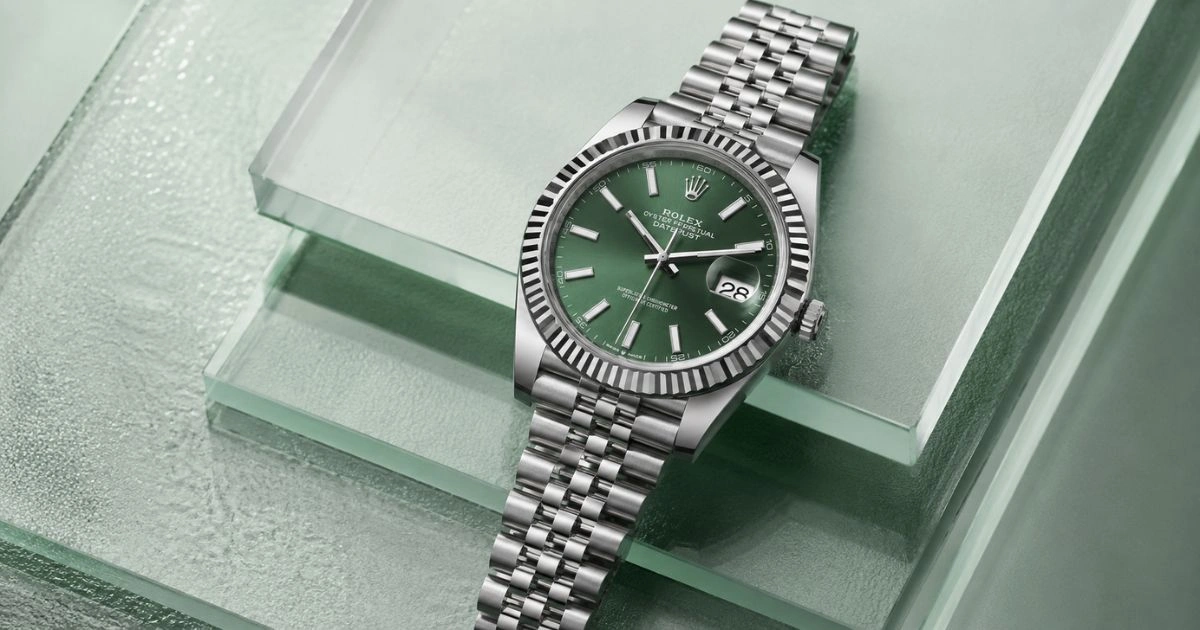
If you could only own one watch for the rest of your life, the Datejust is arguably the perfect choice. Launched in 1945, it is the definition of versatility.
- Why it works: It transitions seamlessly from a boardroom to a beach bar.
- The Details: Look for the Cyclops lens over the date window (a Rolex signature) and the Jubilee bracelet, which is incredibly comfortable.
- The Size: Aim for 36mm or 41mm. The 36mm is a classic “vintage-inspired” fit that works on almost any wrist.
2. The Icon: Rolex Submariner
The Submariner, or “Sub,” is the watch that changed the industry. It is the archetype of the dive watch.
- Why it works: It is robust, timeless, and arguably the most copied watch design in history.
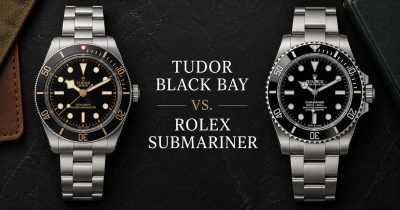
- The Decision: You must decide: Date vs. No-Date. Purists love the symmetry of the “No-Date” (reference 124060). Pragmatists love the utility of the Date (126610LN).
- The Vibe: This is a sports watch. It looks as good with a wetsuit as it does with a t-shirt.
3. The Understated Professional: Rolex Explorer
Not everyone wants to scream “Look at my watch!” from across the room. If you prefer subtlety, the Explorer is your watch. Born from the summit of Mount Everest, the Explorer is the thinking person’s Rolex.
- Why it works: It flies under the radar. To the untrained eye, it is just a steel watch. To those who know, it signifies impeccable taste.
- The Design: The iconic 3-6-9 dial is one of the most legible designs in horology.
The “Wildcard” Entry: The Oyster Perpetual
If the Submariner is out of reach budget-wise, or if you simply want a cleaner aesthetic, the Oyster Perpetual (OP) is the purest expression of Rolex.
It has no date, no extra buttons, and no frills—just the time. It is the cheapest entry point into the brand new Rolex club. In recent years, the OP has become a cult favorite due to its vibrant “Stella” dial colors (like Tiffany Blue or Candy Pink). It is a fun, youthful take on a very serious brand.
New vs. Vintage: Which Path to Choose?
Once you pick a model, you face a philosophical choice: vintage or modern?
- Modern Rolex (Six-Digit References): These are built like tanks. They feature ceramic bezels (which don’t fade or scratch), solid link bracelets, and parachrome hairsprings that are highly resistant to shocks. Modern is for wearability.
- Vintage Rolex (Four or Five-Digit References): These have “soul.” They are lighter, thinner, and feature acrylic crystals that warp the light beautifully. However, they come with risks. You must worry about water resistance, worn-out bracelets, and service history.
For a first-time buyer on a budget, a “Neo-Vintage” watch (late 1980s to early 2000s) is often the best value. You get the classic proportions without the astronomical price of a brand-new model.
Checklist: Before You Pull the Trigger
You have picked the model. You have found the dealer. Before you hand over your hard-earned money, run through this checklist:
- The “Full Set” Question: Is the watch coming with its original box, papers, and warranty card? A “naked” watch (just the watch head) is cheaper, but a full set is much easier to sell later.
- Service History: For pre-owned watches, ask when it was last serviced. Rolex recommends a service every 10 years. Factor that cost (usually 800−1,200) into your budget.
- The Fit: A Rolex should slide over your hand but not spin around your wrist bone. You should feel the weight, but not be burdened by it.
Final Thoughts: Your Wrist, Your Story
The “best” first Rolex is not the one with the highest resale value, nor the one your favorite celebrity wears. It is the one that makes you look down at your wrist and smile.
Whether it is a pristine Datejust catching the sunlight during a meeting, or a scratched-up Explorer that accompanied you on a hike, the magic of Rolex is in the wearing.
Take your time. Do your research. And enjoy the hunt—because the story of how you got your first Rolex is often just as good as the watch itself.